A preventive maintenance schedule for Niagara Falls rentals is a documented plan for inspecting, cleaning, servicing, and addressing property issues before they become urgent failures or create guest and tenant complaints. It connects the property’s condition, equipment, occupancy model, records, and repair procedures in one organized process.
The right plan depends on the property, its systems, manufacturer instructions, lease arrangements, and applicable professional or regulatory requirements. A short-term rental may rely heavily on turnover observations and guest reports, while a long-term rental may require more emphasis on tenant communication, access arrangements, and ongoing condition management.
Why planned maintenance matters for rental owners
A documented maintenance plan helps owners organize inspections, identify recurring concerns, clarify responsibility, and create a record of decisions and costs. It can also help address minor issues before they interfere with a guest’s stay or a tenant’s use of the property.
Preventive maintenance does not eliminate emergencies, guarantee a financial result, or replace required inspections and professional advice. Its value is in supporting consistent decisions: record what was observed, determine what needs attention, authorize appropriate work, and confirm whether the issue was resolved.
For owners considering outsourced support, property management and maintenance services may bring inspections, upkeep, repairs, and reporting into one operating process.
What belongs in a preventive maintenance schedule?

Start with the rental itself rather than an arbitrary list of dates. Divide the property into areas, identify relevant assets and systems, and specify what should be observed, serviced, documented, or escalated.
| Property area | What the plan can address |
|---|---|
| Interior condition | Walls, ceilings, flooring, doors, locks, fixtures, furniture, wear, and possible moisture concerns |
| Systems and appliances | Relevant plumbing, mechanical systems, appliances, manufacturer requirements, and servicing needs |
| Safety-related items | Property-specific safety equipment, access points, locks, emergency information, and applicable requirements |
| Windows and glass | Visible damage, condition concerns, failed components, and repair or replacement assessment |
| Exterior areas | Exterior surfaces, entrances, access routes, visible damage, and upkeep responsibilities |
| Landscaping | Lawn care, landscaping tasks, exterior presentation, and vendor coordination |
| Cleaning observations | Damage, broken fixtures, leaks, missing items, and concerns found during turnover work |
Interior condition and finishes
Interior checks should record the condition of the spaces guests or tenants use every day. Walls, ceilings, flooring, doors, locks, lighting, plumbing fixtures, furniture, and other finishes may show wear or damage that is easier to address when clearly documented.
Useful records can describe the location, observed condition, supporting photographs, and whether the item should be monitored, scheduled for work, or escalated. This helps separate ordinary upkeep from a repair requiring a qualified professional.
Plumbing, mechanical systems, and appliances
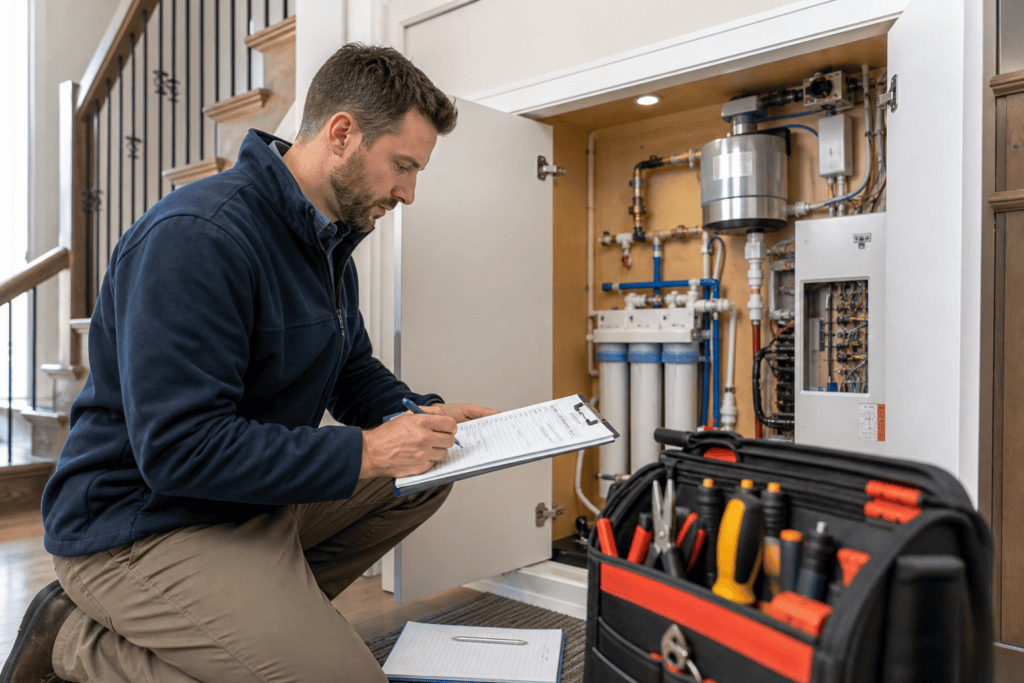
Each property should have an inventory of its relevant systems and appliances, together with manufacturer or service requirements. The plan should identify who is responsible for checking or servicing each item, how concerns are reported, and who can authorize work.
Owners should avoid applying one technical procedure or interval to every rental. Equipment type, age, condition, installation, and manufacturer instructions can affect the appropriate approach.
Safety-related items and access points
Safety-related equipment, locks, entrances, access points, and emergency information deserve specific attention. Exact requirements may depend on the property and applicable rules. For legal, fire, insurance, or building requirements, owners should rely on the relevant authority, insurer, qualified professional, or current governing document.
Windows, glass, exterior areas, and landscaping
Exterior upkeep is part of property maintenance. A plan can include observations about windows and glass, entrances, exterior surfaces, lawn care, landscaping, and visible damage.
HAH Developments lists integrated glass repair and lawn care and landscaping services alongside property management and maintenance. The appropriate work and timing should still be determined by the individual property.
Cleaning and turnover quality
Cleaning is not the same as preventive maintenance, but turnover work can reveal maintenance issues. A cleaner may notice a leaking fixture, broken item, damaged surface, missing equipment, or condition requiring follow-up. Those observations should enter the maintenance record rather than remaining only a housekeeping note.
For short-term rentals, turnover preparation creates an opportunity to confirm readiness for the next guest and report visible concerns. HAH Developments describes housekeeping and turnover cleaning as part of its Airbnb hosting support. Owners seeking dedicated support can review its cleaning services.
Preventive maintenance versus routine work and emergency repairs
| Category | Purpose |
|---|---|
| Preventive maintenance | Planned inspection, servicing, cleaning, or upkeep intended to address needs before urgent failure |
| Routine turnover work | Cleaning, resetting, and checking a short-term rental between stays |
| Property inspection | Documenting condition, observations, and items that may require action |
| Reactive repair | Correcting a defect or failure after it has been identified |
| Emergency response | Addressing an urgent threat or significant disruption that cannot reasonably wait |
How the schedule works for short-term rentals
Short-term rentals require maintenance planning that fits bookings and turnovers. A useful process connects housekeeping observations, guest messages, damage reports, listing readiness, repair coordination, and exterior presentation.
A reported broken fixture should enter the maintenance workflow, be assessed for urgency, and be followed through to completion. A recurring turnover observation may indicate a need for planned attention rather than repeated temporary fixes. Owners can review HAH’s information about Airbnb hosting and co-hosting in Niagara Falls.
How the schedule works for long-term rentals
Long-term rentals place more emphasis on occupied-property coordination. A plan should account for tenant communication, maintenance requests, appropriate access, lease coordination, repairs, and condition records. Work must be handled in accordance with applicable lease terms and law.
HAH Developments describes long-term rental support including leasing, tenant screening, rent collection, tenant relations, maintenance, and repairs. Its long-term rental property information explains how maintenance fits within wider rental management.
How to build a property-specific maintenance plan
- Create an asset and systems inventory. Record rooms, equipment, appliances, exterior areas, access points, and serviceable items.
- Record current condition. Note existing wear, known defects, previous repairs, photographs, and items needing assessment.
- Identify applicable requirements. Gather manufacturer instructions, service recommendations, lease responsibilities, insurance guidance, and professional advice.
- Separate planned tasks from reported issues. Keep recurring care distinct from guest, tenant, cleaner, or owner reports.
- Assign responsibility. Identify whether the owner, manager, tenant, cleaner, handyman, or specialist vendor takes the next action.
- Define approval procedures. Decide how estimates are reviewed and how urgent decisions are handled.
- Document completion. Record work performed, cost, vendor, photographs, completion status, and follow-up.
- Review after changes or incidents. Update the plan after repairs, equipment replacement, property improvements, or a change in rental use.
What to document and when to escalate
Depending on the issue, record the date, location, observation, photographs, apparent urgency, recommended action, responsible person, approval status, estimated or actual cost, vendor, completion status, and follow-up requirement.
A plain-language system can classify an issue as monitor, schedule, authorize, or respond urgently. The classification should reflect the actual condition and professional advice, not an assumed response-time promise. HAH Developments states that it provides maintenance, preventive maintenance, property inspections, repairs, and 24/7 handyman availability; owners should confirm the specific scope for their property.
Questions to ask a Niagara property management company
- How are inspections and findings documented?
- What photographs, invoices, and completion notes will the owner receive?
- How are guest, tenant, cleaner, or owner reports prioritized?
- Which repairs require owner approval?
- Who coordinates vendors for repairs, glass work, cleaning, and landscaping?
- Which services are performed directly and which are outsourced?
- How are turnover observations added to short-term rental records?
- How are tenant access, communication, lease terms, and repair records handled?
- How are costs and financial records presented?
- What after-hours support is available, and what does it include?
For broader selection criteria, review what to look for in Niagara Falls property management and the checks to make before signing with a provider.
How HAH Developments fits into this maintenance model
The Home Away From Home Developments Inc. is a Niagara Falls–based property management company serving short-term and long-term rentals in Niagara Falls and the broader Niagara Region. Its listed services include property inspections, preventive maintenance, repairs, cleaning, glass repair, lawn care and landscaping, owner oversight and financial records, and 24/7 handyman availability.
This combination may suit owners seeking coordinated property management and upkeep. HAH also describes support for bookings, guest communication, turnover cleaning, compliance management, leasing, tenant relations, rent collection, and maintenance. Owners should discuss responsibilities, approvals, records, and service scope before relying on a particular arrangement.
What a general schedule cannot determine
A general article cannot determine the correct maintenance requirements for every rental. The final plan may depend on property type, age, equipment, occupancy model, lease terms, observed condition, manufacturer instructions, and qualified professional advice.
This information does not replace equipment manuals, site-specific assessments, legal guidance, insurance advice, fire-safety requirements, building requirements, or municipal and provincial rules.
A preventive maintenance schedule is a property-care system, not just a calendar
The best preventive maintenance schedule for a Niagara Falls rental connects planned inspection, cleaning, servicing, documentation, and escalation to the property’s actual needs. Short-term rentals need coordination between turnovers, guest reports, listing readiness, and repairs. Long-term rentals need clear tenant communication, appropriate access, lease coordination, and condition records.
Owners can manage this system themselves if they have the time, records, vendor relationships, and property knowledge. A Niagara property management company may be appropriate when an owner wants coordinated inspections, repairs, cleaning, landscaping, communication, and financial documentation.
HAH Developments provides property management and maintenance support for short-term and long-term rentals in Niagara Falls, including inspections, repairs, cleaning, glass repair, landscaping, preventive maintenance, and 24/7 handyman availability. Owners can visit the company’s contact page to discuss service details.