

Most rental headaches don’t start with a bad tenant. They start weeks earlier, when a property owner lists a unit without answering a few basic questions first.
A landlord skips the market research and prices the unit too high, then watches it sit empty for two months. Another skips the legal checklist and gets hit with a bylaw fine before the first tenant even moves a box through the door. A third rents to the first applicant who seems friendly, without checking references, and spends the next year chasing rent payments.
None of these are tenant problems. They’re preparation problems. And they’re avoidable.
This guide walks through the questions every landlord should ask before a property goes on the rental market – whether it’s your first investment condo in Hamilton or your fifth long-term rental in Niagara Falls. Asking the right questions upfront protects your rental income, keeps vacancies short, and keeps you out of a Landlord and Tenant Board hearing room. It’s written for both first-time landlords who are nervous about getting it wrong and experienced owners who want a refresher before their next listing goes live.
Why Asking the Right Questions Matters Before Listing Your Property
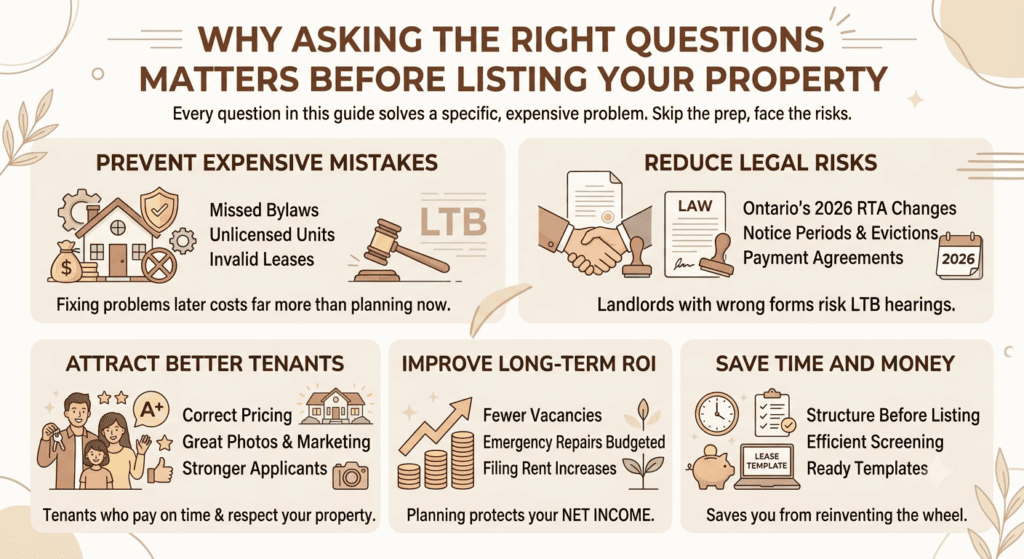
Every question in this guide exists to solve a specific, expensive problem. Here’s what’s actually at stake when you skip the prep work.
Prevent expensive mistakes. A missed bylaw, an unlicensed rental unit, or a lease clause that doesn’t hold up in front of the Landlord and Tenant Board can cost far more to fix after the fact than it would have to get right from the start.
Reduce legal risks. Ontario’s rental rules changed meaningfully in 2026, with amendments to the Residential Tenancies Act affecting notice periods, eviction timelines, and payment agreements. Landlords who don’t stay current on these changes are the ones who show up to LTB hearings with the wrong form.
Attract better tenants. A property that’s priced correctly, photographed well, and marketed to the right audience pulls in stronger applicants – the kind who pay on time and treat the place with respect.
Improve long-term ROI. Every vacant week, every emergency repair you didn’t budget for, and every rent increase you forgot to file properly chips away at your return. Planning ahead protects the number that actually matters: your net income.
Save time and money. A little structure before you list – a checklist, a screening process, a lease template – saves you from reinventing the wheel every time a tenant moves out.
15 Essential Questions Every Landlord Should Ask
1. Is My Property Legally Ready to Be Rented?
Before you post a single photo online, confirm your property actually meets the legal bar for a rental.
- Provincial rules. In Ontario, most rental units fall under the Residential Tenancies Act, which governs everything from rent increases to eviction procedures. Bill 60 and Bill 97 introduced a wave of changes taking effect through 2026, including shorter non-payment notice timelines and new rules around N12 eviction notices, so it’s worth confirming your lease and notice templates are current before you rely on them.
- Municipal bylaws. Some cities require rental licences for specific property types. Hamilton, for example, began requiring a rental housing licence for smaller multi-unit buildings in certain wards starting in 2026, with daily fines for non-compliance. Check your city’s website before assuming you’re exempt.
- Safety requirements. As of 2026, Ontario’s updated Fire Code requires a working carbon monoxide alarm on every storey of a home with a fuel-burning appliance or an attached garage, not just near sleeping areas. Smoke detectors remain mandatory on every level as well.
- Rental licensing. Where applicable, confirm your unit meets zoning requirements, especially for basement apartments, secondary suites, or garden suites, which have their own set of rules in most municipalities.
Actionable tip: Call your municipality’s licensing office directly. A ten-minute phone call now is cheaper than a bylaw fine later.
2. Have I Calculated My True Rental Expenses?
New landlords often price a rental around the mortgage payment alone, then get blindsided by everything else.
- Mortgage. Your baseline monthly obligation, but only one piece of the puzzle.
- Property taxes. These rise annually and vary significantly by municipality.
- Insurance. Landlord insurance in Ontario typically runs between roughly $800 and $2,500 a year, depending on property type, location, and coverage – noticeably more than a standard homeowner policy because it’s built around rental-specific risks.
- Maintenance. A common rule of thumb is to budget 1-2% of the property’s value annually for upkeep, more for older homes.
- Vacancy costs. Even in a strong market, expect at least a few weeks of vacancy between tenants. National vacancy rates for purpose-built rentals climbed to roughly 3.1% in 2025, up from 2.2% the year before, meaning more landlords are seeing units sit slightly longer than they used to.
- Emergency fund. A burst pipe or a failed furnace doesn’t wait for a convenient month. Most experienced landlords keep three to six months of expenses in reserve per property.
Actionable tip: Build a simple spreadsheet with every recurring and occasional cost before you set your rent. If the number doesn’t work on paper, it won’t work in reality.
3. What Is the Right Rental Price?
Pricing is where landlords lose the most money without realizing it – either by underpricing out of nervousness or overpricing out of optimism.
- Market analysis. Look at what similar units in your specific neighbourhood are actually renting for right now, not what they rented for a year ago. Rent growth has slowed sharply in many major markets after the steep increases of 2022-2023.
- Comparable rentals. Compare unit size, condition, parking, and included utilities, not just bedroom count.
- Avoid overpricing. In several major Canadian cities, average asking rents have actually declined for months in a row as new supply came online, meaning tenants have more options and more room to negotiate than they did two years ago.
- Seasonal demand. Rental demand typically peaks in spring and late summer, aligned with lease turnover and school schedules, and softens in winter.
Actionable tip: Price slightly below your top comparable if you want a fast lease-up, or slightly above if you’re willing to wait for the right tenant. Know which trade-off you’re making.
4. Is My Property Attractive Enough to Compete?
With more supply on the market in many cities than there was a few years ago, a mediocre listing sits, and a sharp one doesn’t.
- Repairs. Fix the small stuff – sticky doors, loose handles, dripping taps – before showings, not after a tenant complains.
- Fresh paint. Neutral tones photograph well and appeal to the broadest range of applicants.
- Professional cleaning. A deep clean before listing photos are taken makes a measurable difference in inquiry rates.
- Landscaping. Curb appeal shapes a prospective tenant’s first impression before they’ve even stepped inside.
- Photography. Wide-angle, well-lit photos consistently outperform quick phone snapshots in generating serious inquiries.
Actionable tip: Walk through your unit as if you were the tenant seeing it for the first time. Note anything that would make you hesitate.
5. Who Is My Ideal Tenant?
Understanding who you’re actually trying to reach shapes everything from your marketing to your lease terms.
- Families typically want longer leases, nearby schools, and outdoor space.
- Students often need shorter or flexible terms and proximity to campus.
- Professionals tend to prioritize commute times and modern finishes.
- Long-term renters value stability and are often willing to pay slightly more for a well-maintained unit with a landlord who’s responsive.
- Pet owners represent a large and often underserved segment of renters, and a pet-friendly policy can meaningfully widen your applicant pool.
Actionable tip: Match your listing language and photos to the tenant type you actually want. A listing written for students looks different from one aimed at a family.
6. How Will I Screen Tenants Fairly?
This is the step landlords most often rush – and the one most likely to cause regret later.
- Rental applications. Use a consistent, written application form for every applicant, covering income, employment, and rental history.
- Credit checks. With the applicant’s written consent, you can pull a credit report through Equifax Canada or TransUnion Canada. Many landlords look for a score in the 650-700 range as a general benchmark, though thresholds vary by market and property type.
- Employment verification. Confirm income directly, through pay stubs, a letter of employment, or recent notices of assessment for self-employed applicants.
- Reference checks. Contact at least two previous landlords, not just the most recent one, and ask whether they’d rent to this tenant again.
- Income verification. Under Ontario Human Rights Commission guidance, landlords cannot apply a flat rent-to-income cutoff rule, though income can be considered alongside credit and rental history.
Actionable tip: Write your screening criteria down before you start reviewing applications, and apply the exact same standard to every applicant. Consistency is your best protection against a discrimination complaint.
7. Do I Have a Legally Sound Lease Agreement?
A verbal understanding or a template pulled from a random website is not a lease.
- Lease clauses. In Ontario, most landlords are required to use the province’s standard lease form for residential tenancies.
- Responsibilities. Spell out who handles snow removal, lawn care, and minor repairs.
- Rent payment terms. Include due dates, accepted payment methods, and what happens if a payment is late.
- Maintenance expectations. Clarify how tenants should report issues and what response time they can expect.
- Rules and policies. Cover anything specific to your property, from parking assignments to shared laundry schedules.
Actionable tip: Have a paralegal or lawyer review your lease once, even if you’re using the standard provincial form, to make sure any added schedules or clauses are enforceable.
8. What Maintenance Issues Should Be Fixed Before Move-In?
A tenant’s first week in a new home sets the tone for the entire tenancy. Start it off with a property that works.
- HVAC. Test heating and cooling systems fully, not just a quick power-on check.
- Plumbing. Check for slow drains, running toilets, and water pressure issues.
- Electrical. Confirm every outlet and switch works, and address any flickering lights.
- Appliances. Test the fridge, stove, dishwasher, and laundry machines under real conditions, not just visually.
- Smoke detectors. Replace batteries and confirm units aren’t past their expiry date.
- Carbon monoxide alarms. Under Ontario’s 2026 Fire Code update, these are now required on every storey of homes with fuel-burning appliances or an attached garage, and a missing alarm can jeopardize your insurance coverage if an incident occurs.
Actionable tip: Walk the unit with a written checklist and photograph everything before move-in. It protects both you and your tenant if a dispute comes up later.
9. Am I Properly Insured as a Landlord?
Your homeowner’s policy almost certainly won’t cover a rental property, and finding that out after a claim is the worst possible time.
- Landlord insurance. Also called rented dwelling insurance, this typically costs 15-25% more than a standard home policy because it’s built around rental-specific risks.
- Liability coverage. Protects you if a tenant or visitor is injured on the property and holds you responsible.
- Property protection. Covers the structure itself against fire, water damage, and other insured perils.
- Loss of rental income. Replaces the rent you’d lose if the unit becomes uninhabitable during a covered repair.
Actionable tip: Tell your broker exactly how the property is used, including tenant type and rental structure. Misrepresenting a rental as owner-occupied is one of the fastest ways to void a claim.
10. How Will I Handle Repairs and Emergencies?
Tenants judge landlords by how they respond when something breaks, not by how nice the unit looked during the showing.
- Maintenance process. Set up a clear way for tenants to submit requests, whether that’s a phone number, email, or online portal.
- Emergency contacts. Keep a list of plumbers, electricians, and HVAC technicians who can respond quickly.
- Response times. Set internal targets, such as 24 hours for urgent issues and a few days for routine ones, and communicate them to tenants.
- Preferred contractors. Build relationships with a small group of reliable tradespeople rather than searching from scratch every time something goes wrong.
Actionable tip: A missed maintenance request is one of the top reasons tenants stop paying rent on time or don’t renew. Respond fast, even if it’s just to acknowledge the request.
11. What House Rules Should Be Clearly Defined?
Ambiguity in a lease creates disputes. Specificity prevents them.
- Pets. State clearly whether pets are allowed, and under what conditions.
- Smoking. Most landlords now prohibit smoking indoors; state this explicitly.
- Parking. Assign spots if applicable, and note any restrictions on guest parking.
- Guests. Clarify how long a guest can stay before they’re considered an occupant.
- Noise. Reference any municipal noise bylaws and set reasonable quiet hours.
- Garbage disposal. Outline collection days and any sorting requirements specific to your municipality.
Actionable tip: Put every house rule in writing in the lease itself, not just verbally at move-in. Verbal agreements are hard to enforce later.
12. Am I Prepared for Vacancies?
Even a great property sits empty sometimes. Have a plan ready before it happens.
- Marketing strategy. Know which platforms you’ll list on before your current tenant gives notice.
- Professional listing. A well-written, well-photographed listing consistently draws faster, higher-quality inquiries than a rushed one.
- Showing schedule. Decide in advance whether you’ll do private showings, group open houses, or self-guided tours.
- Tenant turnover plan. Build a standard checklist for cleaning, repairs, and re-listing so turnover doesn’t stall your income.
Actionable tip: Start marketing 60 days before a lease ends whenever possible. The goal is zero gap between tenants, not a mad scramble after move-out.
13. Can I Manage This Property Myself?
Self-management works well for some landlords and badly for others. Be honest about which one you are.
- Time commitment. Managing a rental well means being reachable for maintenance issues, showings, and tenant questions, often outside business hours.
- Distance. Owning a property in a different city or province makes hands-on management significantly harder.
- Legal knowledge. Ontario’s rental laws changed substantially in 2026, and staying current requires ongoing attention.
- Communication skills. Clear, calm, professional communication prevents most tenant disputes from escalating.
Actionable tip: If you’re already stretched thin managing one property, think carefully before adding a second without support.
14. Should I Hire a Property Management Company?
For many landlords, especially those with more than one unit or a property outside their local area, professional management pays for itself.
- Benefits. A property manager handles marketing, screening, rent collection, maintenance coordination, and compliance, freeing up your time and reducing your legal exposure.
- Cost vs. value. Property management fees in Canada typically run between 6% and 12% of monthly rent, though some landlords report a meaningfully higher net operating income once professional management is in place, thanks to better tenant retention, fewer vacancies, and fewer costly mistakes.
- Reduced stress. No 11 p.m. calls about a leaking pipe.
- Better tenant management. Professional screening and consistent lease enforcement tend to reduce turnover and disputes.
- Compliance assistance. A good property manager stays current on provincial and municipal rule changes so you don’t have to track them yourself.
Actionable tip: If you’re weighing the decision, compare the management fee against what a single avoided vacancy, legal dispute, or missed compliance deadline would actually cost you.
15. What’s My Long-Term Investment Strategy?
A rental property is not just a monthly paycheque. It’s a long-term asset, and it should be managed like one.
- Cash flow. Track your net income after all expenses, not just gross rent collected.
- Appreciation. Understand how your local market has historically performed and where it’s headed.
- Future renovations. Plan major upgrades around tenant turnover to minimize disruption and vacancy.
- Portfolio growth. If you plan to add more properties, build systems now that will scale, rather than reinventing your process every time.
- Exit strategy. Know roughly when and how you’d eventually sell or transition the property, even if that’s years away.
Actionable tip: Revisit your investment strategy annually. Rental markets shift, and your plan should shift with them.
Common Mistakes Landlords Make Before Renting
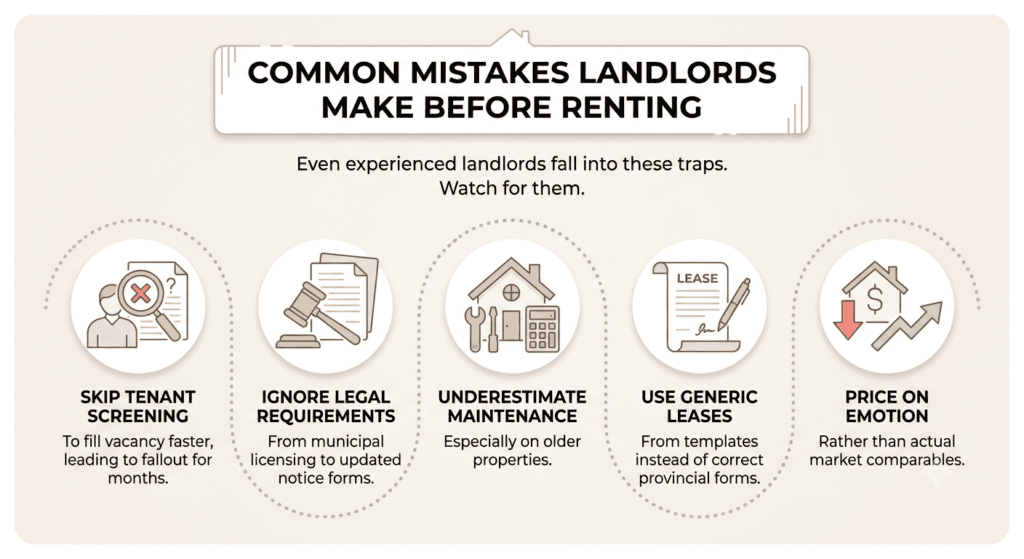
Even experienced landlords fall into these traps. Watch for them.
- Skipping tenant screening to fill a vacancy faster, then dealing with the fallout for months afterward.
- Ignoring legal requirements, from municipal licensing to updated notice forms.
- Underestimating maintenance costs, especially on older properties.
- Using generic lease agreements pulled from a template site instead of the correct provincial standard form.
- Pricing based on emotion rather than actual market comparables.
- Poor communication with tenants, which turns small issues into formal complaints.
Quick Pre-Rental Checklist
Before your listing goes live, confirm you can check off every item below:
- [ ] Property inspected top to bottom
- [ ] Repairs completed
- [ ] Insurance updated for rental use
- [ ] Lease prepared using the correct provincial standard form
- [ ] Rent researched against current local comparables
- [ ] Photos taken professionally
- [ ] Screening process ready and consistent
- [ ] Emergency contacts organized
Final Thoughts
Successful renting starts long before the listing goes live. The landlords who avoid vacancies, legal disputes, and tenant headaches aren’t the luckiest ones – they’re the ones who asked the right questions early and built a process around the answers.
By working through these 15 questions, you protect your investment, reduce stress, attract reliable tenants, and set yourself up for a smoother rental experience from day one. If some of these questions raised more concerns than you expected, that’s a normal part of the process, not a sign you’re not cut out for this.
Not sure you have the time or local expertise to manage all of this yourself? The HAH Developments manages long-term and short-term rentals across Niagara Falls and the surrounding region, handling everything from tenant screening and lease compliance to maintenance and rent collection. Contact The HAH Developments today to find out how stress-free property ownership actually feels.
Frequently Asked Questions
1. What should landlords do before renting out a property?
Before listing, confirm your property meets provincial and municipal legal requirements, calculate your true operating costs, research a realistic rental price, and prepare a lease and screening process. Skipping any of these steps is the most common cause of costly problems down the road.
2. How do landlords choose the right tenant?
The strongest approach combines a consistent written application, a credit check with the applicant’s consent, employment and income verification, and reference checks with at least two previous landlords. Applying the same criteria to every applicant also protects you from discrimination complaints.
3. What documents should a landlord prepare before renting?
At minimum, prepare a compliant lease agreement (Ontario’s standard lease form for most tenancies), a rental application form, a move-in inspection checklist, and proof of landlord insurance. Keeping these organized from day one saves significant time later.
4. Should landlords perform credit and background checks?
Yes, with the applicant’s written consent. A credit check through Equifax Canada or TransUnion Canada gives insight into payment reliability, while reference checks with previous landlords add context a credit score alone can’t provide.
5. Is landlord insurance different from homeowners insurance?
Yes. Standard homeowner policies are built for owner-occupied homes and typically exclude rental activity. Landlord insurance, sometimes called rented dwelling insurance, covers rental-specific risks like tenant-caused damage and loss of rental income, and generally costs more than a homeowner policy as a result.
6. Is hiring a property management company worth it?
It depends on your time, location, and portfolio size. Property management fees in Canada typically range from 6% to 12% of monthly rent, but many landlords find the reduction in vacancies, legal risk, and personal stress makes it worthwhile, especially for remote owners or those with multiple units.