Guests decide whether your Airbnb “feels clean” within the first ninety seconds of walking through the door. They notice the smell before they notice the decor. They run a finger along the coffee table before they check the Wi-Fi password. And whatever they find in those first few seconds is exactly what they’ll write about in your review three days later.
That review matters more than most hosts realize. Listings with a cleanliness rating of 4.8 stars or higher pull in roughly 20% more bookings than listings that fall below that mark, and moving a property from a 2-star to a 4-star average can lift revenue by as much as 600%. Cleanliness isn’t a nice-to-have anymore. It’s the single biggest lever you have over your booking calendar.
The problem is that most hosts clean based on habit, not on a system. They wipe what looks dirty and skip what doesn’t, and that inconsistency is exactly what shows up in guest complaints. A proper Airbnb cleaning checklist removes the guesswork. It turns turnover day into a repeatable process that produces the same spotless result whether you’re cleaning the unit yourself, training a new cleaner, or handing the job off to a property manager.
This guide walks through everything: why cleanliness carries so much weight with Airbnb’s algorithm, a complete room-by-room checklist, the difference between cleaning and disinfecting, how to price your cleaning fee, and what Niagara Falls hosts specifically need to know about local short-term rental rules. By the end, you’ll have a system you can hand to anyone and trust the result.
Why Cleanliness Makes or Breaks Your Airbnb Rating
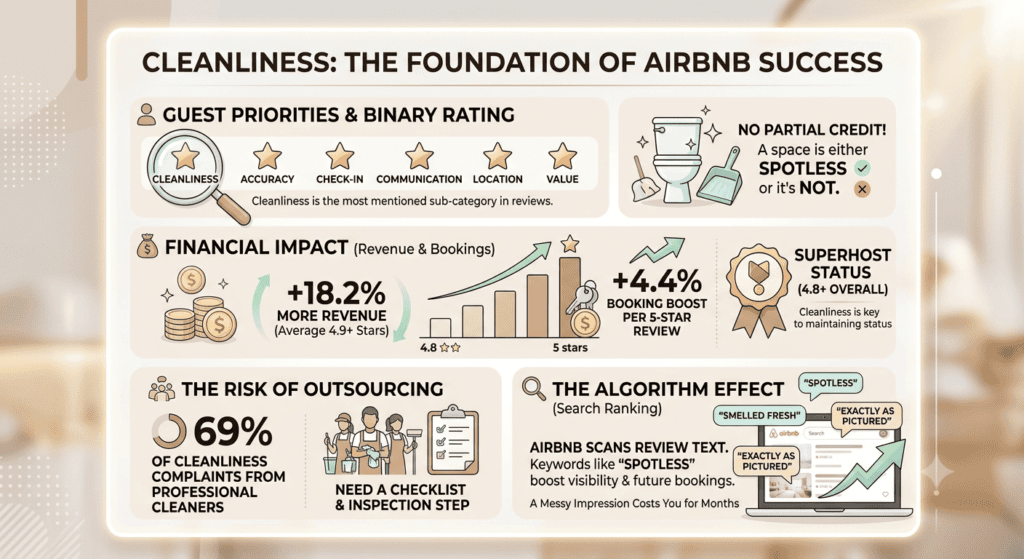
Airbnb doesn’t just track your overall star rating. Guests rate your property across six sub-categories – cleanliness, accuracy, check-in, communication, location, and value – and cleanliness is consistently the one guests mention most often in written reviews. It’s also the most “binary” of the six. A space is either clean or it isn’t. There’s no partial credit for a bathroom that’s 90% spotless with one hair left behind the toilet.
The financial impact is easy to underestimate until you see the numbers side by side:
- Listings averaging 4.9 stars or higher earn about 18.2% more revenue than similarly positioned listings with lower ratings.
- Each 5-star review adds roughly a 4.4% boost in future bookings.
- Airbnb requires a minimum 4.8 overall rating to maintain Superhost status, and cleanliness scores are one of the fastest ways that average slips.
- Professional cleaning companies are responsible for 69% of the cleanliness complaints hosts receive, which means outsourcing your turnover doesn’t automatically solve the problem – you still need a checklist and an inspection step.
There’s also an algorithm effect that’s easy to miss. Airbnb’s search ranking doesn’t just read your star average; it scans the actual text of your reviews. When guests write things like “spotless,” “smelled fresh,” or “exactly as pictured,” those phrases feed into relevance matching and can push your listing higher for guests searching those same qualities. A messy first impression doesn’t just cost you one review – it costs you visibility for months afterward, since recent reviews carry more weight than older ones.
How Airbnb’s Rating System Actually Works
Understanding the mechanics helps explain why a single missed detail can do so much damage. Airbnb runs on a dual-blind review system: both guest and host submit reviews privately, and neither side sees the other’s feedback until both are submitted or the 14-day window closes. Once a review is published, it cannot be edited or deleted – which means there’s no fixing a bad impression after the fact. You only get one shot at the turnover that guest experiences.
Reviews are also permanent contributors to your account’s search placement. Consistently low cleanliness scores can quietly push your listing further down the results page, even if your overall rating still looks respectable. This is why property managers obsess over process rather than effort – effort is inconsistent, but a checklist isn’t.
The Complete Airbnb Cleaning Checklist by Room
This is the core of a strong Airbnb cleaning checklist: a structured, room-by-room routine that leaves nothing to memory. Print it, laminate it, or turn it into a shared app checklist for your cleaning team – the format matters less than the consistency.
Work through the property in a fixed order every time, rather than jumping around based on what looks dirty at a glance. Most experienced hosts clean top to bottom and back to front within each room – dust and debris fall downward, so ceilings, shelves, and light fixtures get handled before floors – and finish the entire unit before circling back for a final walkthrough. This order matters more than it sounds: cleaning a floor and then dusting a shelf above it means re-cleaning the floor, which wastes time on every single turnover and is one of the quiet reasons “quick” cleans run long.
Entryway and Living Room
- Wipe down the front door, handle, and lock (a sticky lock is one of the fastest ways to start a stay on the wrong foot)
- Vacuum or sweep entry mats and remove any outdoor debris
- Dust all surfaces: shelves, picture frames, TV stand, window sills
- Fluff and straighten couch cushions and throw blankets
- Vacuum upholstery and check for crumbs or stains between cushions
- Wipe down light switches, remote controls, and doorknobs
- Clean windows and mirrors with a streak-free glass cleaner
- Check that all electronics, lamps, and smart devices are working
- Empty and reline any trash bins
- Restock welcome materials: guidebook, Wi-Fi card, house manual
Kitchen
- Clean and disinfect all countertops, backsplash, and cabinet fronts
- Empty, wipe, and check the refrigerator for leftover food or spills
- Run the dishwasher or hand-wash and put away every dish, cup, and utensil
- Clean the microwave inside and out, including under the turntable
- Wipe down the stovetop, oven exterior, and range hood
- Check the oven interior for spills at least every few turnovers
- Descale and clean the coffee maker or kettle
- Restock coffee, tea, salt, pepper, oil, and dish soap to your listed amenity standard
- Wipe down small appliances (toaster, blender) and put them back in place
- Sweep and mop the floor, paying attention to corners and under cabinets
- Empty and reline the kitchen trash and recycling bins
Bedrooms
- Strip and replace all bedding with freshly laundered, wrinkle-free linens
- Check mattress protectors and pillow protectors for stains and replace if needed
- Fluff and arrange pillows and decorative cushions
- Dust nightstands, dressers, headboards, and lamp shades
- Vacuum under the bed and in closet corners
- Check closets for hangers, an empty luggage rack, and no leftover guest items
- Wipe down light switches, remote controls, and any charging stations
- Open blinds or curtains to air the room, then adjust them to the standard listing photo position
- Check smoke detectors are present and functioning
Bathrooms
- Scrub and disinfect the toilet, inside and out, including the base
- Clean and disinfect the shower, tub, and any grout or tile
- Polish faucets, showerheads, and mirrors to remove water spots
- Wipe down the vanity and check drawers for leftover guest items
- Sweep and mop the floor, including behind the toilet
- Replace all towels with fresh, unstained linens
- Restock toilet paper, hand soap, shampoo, and conditioner
- Empty and reline the bathroom trash bin
- Check for hair in drains, corners, and behind the toilet – this is the single most common guest complaint
- Refill or replace any diffusers and check for lingering odors
Outdoor Spaces and Amenities
- Sweep patios, balconies, and entryways
- Wipe down outdoor furniture and check cushions for mildew
- Clean the grill if one is provided
- Skim and check pool or hot tub chemical levels where applicable
- Empty outdoor ashtrays or bins
- Check exterior lighting is functioning for evening arrivals
Final Walkthrough Details
- Walk every room with the listing photos open on your phone and match the staging
- Test the thermostat and set it to a comfortable default temperature
- Check every light bulb and replace any that are burnt out
- Confirm all doors and windows lock properly
- Run water in every sink and shower to check for leaks
- Do a final smell check at nose height, not floor height – guests notice scent immediately at check-in
- Take dated photos of the finished space for your own turnover records
Cleaning vs. Sanitizing vs. Disinfecting: Know the Difference
Guests today arrive with hotel-grade hygiene expectations, and the pandemic permanently raised that bar. What used to count as “extra effort” is now simply the baseline. That means your team needs to understand three distinct steps, not just one:
- Cleaning removes visible dirt, dust, and debris – think sweeping, vacuuming, and wiping surfaces.
- Sanitizing reduces bacteria to safe levels on food-contact surfaces like countertops and cutting boards.
- Disinfecting kills viruses and bacteria on high-touch surfaces: door handles, light switches, remote controls, and cabinet pulls.
Skipping straight to disinfecting without cleaning first actually makes the disinfectant less effective, since dirt and grime block it from reaching the surface. The correct order is always clean, then disinfect – and most EPA-approved disinfectants need several minutes of “dwell time” on a surface to actually kill pathogens, so a fast spray-and-wipe often looks thorough without doing the job. If guests can’t visibly tell that high-touch points were sanitized, most will assume they weren’t.
Building a Turnover System That Works Every Time
Time Guidelines
A one-bedroom unit typically takes a professional cleaner 60 to 90 minutes for a standard turnover, while larger three- and four-bedroom properties can run two to three hours, especially with multiple bathrooms or outdoor amenities involved. Deep cleans – the kind that hit baseboards, window tracks, and inside large appliances – should happen on a separate, less frequent schedule, ideally every few months rather than at every turnover.
Tools and Products Worth Investing In
- Microfiber cloths for streak-free dusting and wiping without scratching surfaces
- A HEPA vacuum to capture allergens and fine dust that regular vacuums miss
- A steam cleaner for chemical-free sanitizing on tile, grout, and upholstery
- EPA Safer Choice or Green Seal-certified products, which meet federal safety and biodegradability standards and appeal to guests who read listing descriptions closely for eco-conscious details
- A dedicated supply caddy so your cleaner (or you) never has to hunt for products mid-turnover
Should You Clean It Yourself or Hire Professionals?
Self-cleaning works for hosts with one property and a flexible schedule, but it becomes a bottleneck fast once you’re managing multiple listings or back-to-back same-day turnovers. Professional cleaners solve the scheduling problem but introduce a new one: nearly 70% of cleanliness complaints trace back to professional cleaning teams, usually because there’s no second set of eyes checking the work before the next guest arrives. The fix isn’t choosing one over the other – it’s adding a mandatory inspection step after every clean, regardless of who did it.
Pricing Your Cleaning Fee Without Losing Bookings
Your Airbnb cleaning checklist only works if it’s funded properly. Underpricing your cleaning fee is one of the fastest ways to end up with a rushed, incomplete turnover.
Current data shows the average U.S. cleaning fee sits around $188, though the median is closer to $75 once outlier luxury properties are excluded. The sweet spot that maximizes revenue is charging a cleaning fee equal to 25% to 50% of your average daily rate. Listings in that range earn roughly $64,405 annually at 46.2% occupancy, compared to just $37,474 for listings that charge no cleaning fee at all. Push the fee above 100% of your nightly rate, though, and both revenue and ratings drop – guests notice when the fee feels disconnected from the stay.
A few pricing principles worth building into your strategy:
- Guests tend to abandon a booking when the cleaning fee exceeds roughly 15–17% of the total trip cost, so keep that ratio in mind for shorter stays.
- The majority of Superhosts charge a cleaning fee rather than folding it into the nightly rate, and they earn significantly more annually while maintaining the same top-tier ratings as fee-free listings.
- If your market is dominated by short, one- or two-night stays, consider lowering the visible cleaning fee and building a small amount into your nightly rate instead – guests respond better to a lower total price than to a large one-time charge at checkout.
It’s also worth revisiting your cleaning fee any time your underlying costs shift – a new cleaner charging different rates, rising laundry costs, or a longer turnover standard you’ve added, like a mandatory inspection step. Treating the fee as a number you set once and forget is one of the most common ways hosts quietly erode their own margin over time. A quick quarterly review, checked against your actual labor and supply costs, keeps the fee funding the level of clean your reviews depend on.
Niagara Falls Hosts: What Local Rules Mean for Your Cleaning Routine
If you’re operating a short-term rental in Niagara Falls, your cleaning checklist needs to work alongside the city’s licensing requirements, not just Airbnb’s review system. The City of Niagara Falls requires all short-term rentals to hold a Vacation Rental Unit license, with a $500 initial fee and a $250 annual renewal, and properties must sit within a designated tourist, general, or commercial zone. Licensed units are subject to fire, building, and bylaw inspections, and hosts are required to maintain working smoke alarms, carbon monoxide detectors, and clear emergency exits – all details that belong on your turnover checklist, not just your annual compliance list.
The city also enforces a Municipal Accommodation Tax on every stay, and Airbnb typically collects and remits it automatically on the host’s behalf. None of this replaces good housekeeping, but it does mean Niagara Falls hosts are held to a documented standard that goes beyond guest reviews – unannounced inspections are part of how the city enforces its bylaw, and a property that isn’t guest-ready can also fail a compliance check.
This is exactly where working with a local property management partner pays for itself. A team that already understands Niagara Falls’ zoning rules, licensing renewals, and inspection standards can build your cleaning schedule around both sets of requirements at once, so you’re never caught managing two systems that don’t talk to each other.
Niagara Falls also sits alongside neighboring markets like Niagara-on-the-Lake and St. Catharines, each with its own licensing structure and enforcement style. A host who owns properties across the region can’t rely on a single set of rules; a turnover checklist that satisfies one municipality’s inspection standard won’t automatically satisfy another. Building your cleaning routine around the strictest applicable standard – rather than the minimum for any one city – is the simplest way to stay compliant everywhere you operate, and it happens to align closely with what guests already expect from a top-rated listing.
Seasonal Considerations for Niagara Region Hosts
Niagara Falls draws a heavy tourist season, and your cleaning checklist should flex with it. During peak summer and holiday weekends, back-to-back same-day turnovers become common, which is exactly when shortcuts are most tempting and most damaging. Building in a buffer – even just 30 extra minutes between checkout and check-in – gives your cleaning team room to complete the full checklist and still leave time for a second-look inspection.
Winter months bring their own checklist additions: salt and slush tracked in through the entryway, condensation on windows, and higher heating costs that make guests more sensitive to drafts or a thermostat left on the wrong setting. Adding a seasonal supplement to your standard Airbnb cleaning checklist – a mat swap, extra floor attention near entry points, and a furnace filter check – keeps your property guest-ready no matter what time of year someone books.
Common Cleaning Mistakes That Tank Reviews
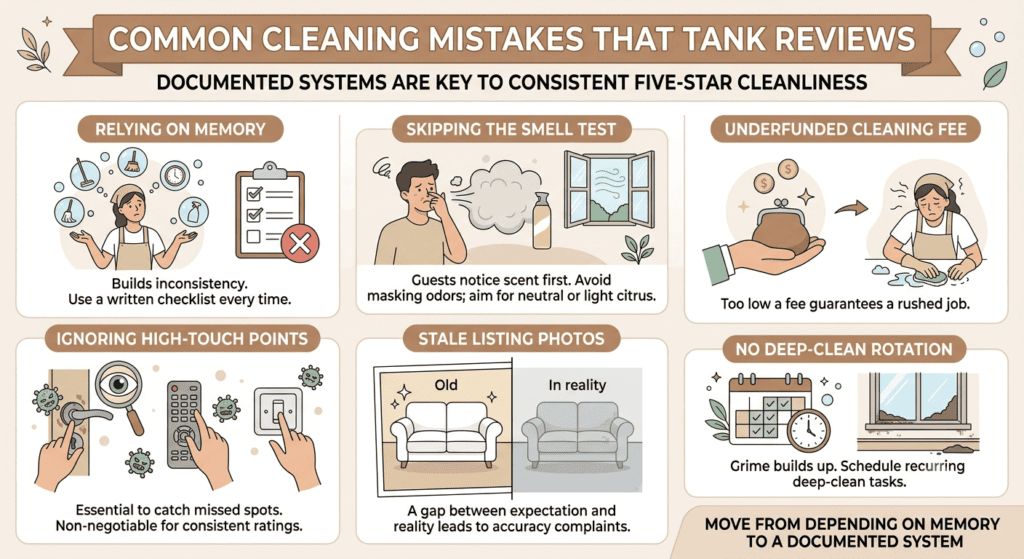
Even experienced hosts fall into these traps. Watch for:
- Relying on memory instead of a checklist. The fastest way to build inconsistency into your turnover is to skip the written list because “the cleaner knows what to do.”
- Skipping the smell test. Guests notice scent before anything else, and heavy air freshener can read as masking odors rather than eliminating them. Open windows between stays when possible and aim for neutral or light citrus notes.
- No second-look inspection. Since most complaints originate with professional cleaners, not skipping this step is non-negotiable if you want consistent five-star cleanliness.
- Letting listing photos go stale. If your photos show a bright white couch and years of turnovers have left it slightly gray, guests will notice the gap between expectation and reality – and that becomes an accuracy complaint as much as a cleanliness one.
- Ignoring high-touch points. Door handles, remotes, and light switches are exactly what guests touch first, and exactly what gets skipped when a cleaner is rushing between same-day turnovers.
- Treating the cleaning fee as an afterthought. A fee that’s too low to fund a proper turnover guarantees a rushed job, no matter how good your checklist looks on paper.
- Never rotating deep-clean tasks into the schedule. A property can pass a quick visual check every week and still accumulate grime in places guests eventually notice – window tracks, baseboards, behind appliances, and inside cabinet drawers. If these tasks aren’t on a recurring calendar, they simply don’t happen.
- Assuming a good review means nothing needs to change. Even 5-star listings benefit from an occasional fresh set of eyes. Ask a friend, a fellow host, or your property manager to walk through the space as if they were a paying guest and note anything that feels overlooked.
Most of these mistakes share a common thread: they happen when cleaning depends on someone remembering to do it right, rather than a documented system that makes the right outcome the default. That’s the entire purpose of building a proper checklist in the first place – it protects your rating even on the days when your cleaner is rushed, new, or covering for someone else.
Training Your Cleaning Team to Follow the System
A checklist only works if the people using it actually follow it the same way every time. If you manage a cleaning team – whether that’s one part-time cleaner or a rotating group covering multiple properties – a short onboarding walkthrough goes a long way. Walk a new cleaner through the property in person at least once, point out the specific trouble spots unique to that unit (a shower that streaks easily, a floor that shows every footprint), and have them shadow a full turnover before working solo.
From there, a simple accountability loop keeps standards consistent: the cleaner completes the checklist, a supervisor or the host does a spot-check inspection, and any misses get logged so the same mistake doesn’t repeat at the next turnover. Photo documentation – a quick picture of the made bed, the bathroom, and the kitchen after each clean – creates a paper trail that protects both the host and the cleaner if a guest ever disputes the condition of the property at check-in. Over time, this loop is what turns a good one-time clean into a consistent five-star standard across every single turnover.
How The HAH Developments Helps You Deliver 5-Star Cleanliness Every Time
Running a spotless turnover on every single booking is a full-time job on its own – and that’s before factoring in guest communication, licensing renewals, and pricing strategy. This is exactly the gap The HAH Developments was built to close.
As a premium property management company based in Niagara Falls, Ontario, The HAH Developments handles professional cleaning and property care as part of a complete Airbnb hosting and co-hosting service. That means every turnover follows a structured checklist, gets a second-look inspection, and stays aligned with Niagara Falls’ licensing and safety requirements – so your cleanliness score, your Superhost status, and your booking calendar stay protected without you having to manage it all yourself.
Whether you’re a first-time host trying to earn your first string of 5-star reviews or an investor scaling a portfolio of short-term rentals, a professional partner turns cleanliness from a daily worry into a system you don’t have to think about.
Final Thoughts
A five-star Airbnb reputation isn’t built on luck or good intentions – it’s built on a repeatable Airbnb cleaning checklist that removes guesswork from every single turnover. Guests can’t see the effort that went into your booking calendar, your pricing strategy, or your guest communication. But they can see, smell, and feel whether your space is truly clean the moment they walk in, and that first impression writes most of your review before the stay even really begins.
Consistency, not perfection on any single visit, is what actually moves your rating over time. Guests forgive a lot when they can tell a property is genuinely well cared for, and they remember it when it isn’t. A documented checklist, a funded cleaning fee, and a second-look inspection are the three pieces that turn “usually clean” into “always clean” – and that shift is what separates hosts who occasionally earn five stars from hosts who earn them as the default outcome of every single stay.
If managing that standard across every turnover feels like more than you want to take on alone, The HAH Developments is ready to help. From professional cleaning and property care to full Airbnb hosting and co-hosting management in Niagara Falls, our team builds the systems that keep your reviews high and your calendar full – so you can enjoy the income without the 2 a.m. turnover stress. Contact The HAH Developments today to see how a professionally managed cleaning system can transform your guest reviews and your bottom line.
Frequently Asked Questions
How often should an Airbnb be deep cleaned versus just turned over? A standard turnover clean should happen after every guest checkout, while a deep clean – baseboards, window tracks, inside appliances, and grout – should happen every few months depending on your booking volume and property size.
What’s the single biggest cleaning mistake that hurts Airbnb reviews? Leaving hair or grime in bathroom corners and behind the toilet is the most frequently mentioned complaint in negative reviews, followed closely by lingering odors and dusty surfaces guests can feel with their hands.
Do I need to disinfect my Airbnb or is regular cleaning enough? Regular cleaning removes visible dirt, but Airbnb and VRBO both treat disinfecting high-touch surfaces – door handles, remotes, light switches – as the baseline expectation for every turnover in 2026, not an optional extra.
How much should I charge for an Airbnb cleaning fee? Most hosts see the strongest revenue results by pricing the cleaning fee at 25% to 50% of their average daily rate, while keeping the total fee under roughly 15–17% of the overall trip cost to avoid checkout abandonment.
Should I clean my Airbnb myself or hire a cleaning company? Either can work well, but professional cleaners are responsible for the majority of reported cleanliness complaints, so the real fix is pairing whichever option you choose with a written checklist and a mandatory inspection before every check-in.
Does a messy Airbnb actually affect my search ranking, not just my reviews? Yes. Airbnb’s algorithm reads the text of your reviews in addition to your star rating, so repeated cleanliness complaints can quietly lower your search placement even if your overall average still looks acceptable.