A useful lawn care schedule for a Niagara Falls rental property is more than a list of mowing dates. It should identify recurring outdoor checks, assign responsibility, coordinate access with guests or tenants, record issues, and explain when routine care becomes a maintenance request.
That structure matters whether you manage a vacation rental, a long-term home, or several investment properties. Outdoor work may need to change with property conditions, occupancy, and weather, so a reliable schedule should be condition-based and easy to update.
Quick summary

- Define who checks the lawn, what they inspect, and how issues are documented.
- Coordinate outdoor visits with guest stays, tenant communication, gates, shared areas, and access.
- Use condition reviews instead of assuming identical timing suits every property.
- Confirm service scope, reporting, weather flexibility, cleanup, repairs, and urgent-problem handling before hiring a provider.
- Consider integrated property care when lawn work must connect with inspections, maintenance, cleaning, or rental management.
What should a rental-property lawn care schedule cover?
A workable schedule should answer five questions: what needs attention, who is responsible, when the property will be checked, how access will be handled, and what happens when someone finds a problem. If any point is unclear, a missed visit or unnoticed issue can become an avoidable coordination problem.
Document the schedule in a shared record. Include the property address, outdoor areas covered, access instructions, occupant-notification requirements, contact details, visit records, notes or photos where appropriate, and an escalation contact for work outside routine lawn care.
Separate routine care from corrective work
Routine lawn care and corrective maintenance are not always the same service. A schedule may cover regular appearance checks and agreed outdoor upkeep, while a separate process handles damaged fencing, broken irrigation components, unsafe surfaces, fallen branches, drainage concerns, or other issues requiring assessment.
Make that distinction before service begins. It clarifies what is included, gives the provider a reporting duty, and prevents occupants from assuming every outdoor problem will be resolved during a routine visit.
Routine appearance and condition checks

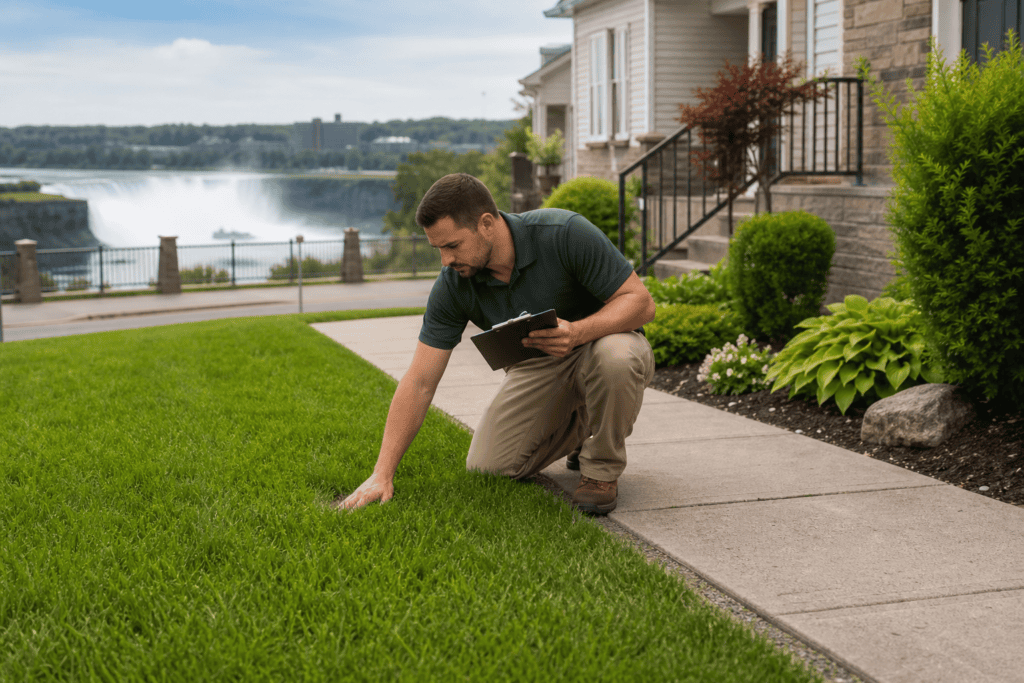
Each review should look beyond whether the grass appears recently cut. The person attending should note visible changes that could affect appearance, access, property care, or the next visit.
- Visible overgrowth or areas needing attention.
- Debris, litter, branches, or items left in lawn and landscaped areas.
- Damage to edging, gates, fences, outdoor fixtures, or nearby features.
- Blocked or difficult access points, including locked gates or shared spaces.
- Changes requiring a separate maintenance assessment.
- Whether the property appears ready for the next expected guest or tenant use.
Record what was observed, not just that someone attended. A note such as “rear yard checked, gate locked, debris removed, repair question reported” is more useful than a completed-status entry. Photos can help explain a condition when taken appropriately and without compromising occupant privacy.
Property inspections and maintenance coordination
Lawn care should connect with the broader property inspection and maintenance system. An outdoor visit may reveal a problem belonging with a maintenance team, such as damage near a walkway or an access issue affecting another service. The schedule should state who receives the report and who decides whether further work is needed.
Owners using a property manager should ask how lawn observations are incorporated into inspection notes, maintenance requests, and owner reporting. HAH Developments describes its property management and maintenance offering as including preventive maintenance, property inspections, repairs, and 24/7 handyman availability. Review those capabilities alongside questions owners should ask when evaluating property management in Niagara Falls.
Do not assume a lawn-care provider is responsible for every issue found outside. Escalation may involve notifying the owner, sending the matter to a property manager, requesting an estimate, or documenting that specialist assessment is required.
Guest, tenant, and access coordination
Outdoor maintenance takes place around people who live in or visit the property. For short-term rentals, account for arrivals, departures, occupied periods, outdoor amenities, and guest communication. For long-term rentals, explain how occupants are notified, which areas may be accessed, and how privacy is respected.
Before the first visit, document gate instructions, shared driveways, locked storage areas, parking limitations, and spaces outside the service. Confirm who supplies access and what happens if the provider cannot enter.
Missed access should be recorded rather than silently treated as completed work. The owner or manager can then decide whether to reschedule, contact the occupant, update instructions, or review the arrangement.
How to plan seasonal lawn care without relying on fixed dates
There is no single calendar that fits every rental property. Appropriate timing may depend on the lawn, surrounding landscaping, property use, and the provider’s assessment.
Instead of relying on an unverified month-by-month formula, create review points. Ask whether appearance has changed, whether the property needs cleanup or separate repair, whether access remains workable, and whether planned service still matches current use.
- Regular review: Check visible lawn and landscape conditions at the agreed frequency.
- Change-of-condition review: Reassess after a noticeable weather event, complaint, property project, or access change.
- Occupancy review: Confirm outdoor work fits upcoming bookings or tenant arrangements.
- Service review: Ask whether the scope and timing remain appropriate.
If a provider recommends a treatment or seasonal task, ask what condition supports it, whether it is included, and how it will be documented. This keeps the schedule practical without presenting general assumptions as a property-specific plan.
Which lawn care management model fits the property?
The right arrangement depends on the owner’s time and ability to coordinate people, access, records, and repairs. Three models are worth comparing.
Self-management
Self-management may suit an owner who lives nearby, can attend consistently, and is comfortable arranging follow-up work. The owner retains direct control but remains responsible for missed visits, access problems, occupant messages, and repair decisions.
A separate lawn-care contractor
A dedicated contractor can handle agreed outdoor work while the owner or property manager handles inspections, occupant communication, and other repairs. This works best when service boundaries and communication responsibilities are clear.
An integrated property-care provider
An integrated provider may help when lawn care connects with cleaning, inspections, repairs, and rental management. Confirm the exact scope, reporting process, visit frequency, additional charges, and responsibility for work outside routine upkeep.
- Who notices and reports outdoor problems?
- Who communicates with guests or tenants?
- Who controls access and rescheduling?
- Who authorizes repairs or additional work?
- Who keeps visit records?
- Who responds outside normal service hours?
What should owners ask a Niagara Falls lawn-care provider?
Request a written explanation of what the schedule includes and how exceptions will be handled.
Service scope
- Which lawn and landscaped areas are included?
- What routine tasks and cleanup are included?
- Will visible damage be reported?
- Are treatments, repairs, or specialty services separate?
Scheduling and weather
- How is visit frequency determined?
- How are visits changed when conditions are unsuitable?
- How are delays or missed visits reported?
- Can visits be adjusted around bookings, tenants, or property work?
Access and communication
- Who provides access to locked gates or shared areas?
- What happens if the provider cannot enter?
- Who communicates when occupants need notice?
- Will visits and reported issues be documented?
- Who handles an urgent outdoor problem?
Agreement terms
- What are the cancellation and rescheduling terms?
- How are additional tasks approved and priced?
- What insurance or contractor information is available?
- Who decides whether a reported issue needs specialist repair?
These questions apply to any provider, including an integrated property manager. Compare written scope and communication processes, not only promised frequency or initial price. This property management comparison checklist for Niagara Falls can also help.
When does integrated property care make sense?
Integrated care can make sense when owners do not want lawn maintenance, inspections, cleaning, guest or tenant communication, and repairs handled through disconnected channels. It may be especially useful for owners managing several properties or living far away.
The Home Away From Home Developments Inc. is a Niagara Falls-based property management company serving short-term and long-term rental owners. Its listed services include lawn care and landscaping, property management and maintenance, inspections, preventive maintenance, repairs, cleaning, and 24/7 handyman availability. HAH Developments states that it manages more than 75 properties, but owners should confirm which services and terms apply to their property.
Ask whether the provider offers one clear contact, usable records, defined service boundaries, and consistent escalation. Those details determine whether integration reduces coordination work.
A simple way to put the schedule into operation
- Document the property: List lawn areas, landscaped sections, gates, shared spaces, restrictions, and features requiring attention.
- Assign responsibility: Name the person responsible for checks, occupant communication, records, and escalation.
- Define review points: Set the frequency and triggers for an additional review.
- Set reporting expectations: Decide what a completed visit record includes and where it is stored.
- Establish escalation rules: Explain who approves additional work and how urgent concerns are communicated.
- Review the arrangement: Reassess when use, access, scope, or conditions change.
For a portfolio, use the same basic record structure while keeping property-specific instructions separate. Consistency makes missed visits and unresolved issues easier to identify without assuming every lawn needs identical treatment.
Frequently asked questions
Should a rental-property lawn care schedule use fixed dates?
Fixed appointments can support accountability, but work should remain flexible enough to respond to conditions and access. Use agreed review points and a process for changes rather than assuming one calendar suits every property.
How should lawn care be coordinated with rental property inspections?
Give the lawn-care provider a defined way to record outdoor concerns and send them to the inspection or maintenance contact. Distinguish routine care from repairs so a report is not mistaken for completed service.
What should a landlord confirm before hiring lawn care in Niagara Falls?
Confirm areas covered, tasks, frequency, weather policy, cleanup, access, occupant communication, records, additional-work approvals, cancellation terms, and urgent-issue contact. Request these details in writing.
When should a rental owner consider combining lawn care with property management?
Consider it when outdoor upkeep involves inspections, occupant communication, access coordination, cleaning, or repairs. Verify the lawn-care scope and reporting process before signing.
Conclusion: build a schedule that someone can reliably follow
The strongest lawn care schedule in Niagara Falls is not the one with the most fixed dates. It clearly assigns responsibility, checks conditions, coordinates access, records work, and explains how observations become maintenance requests.
Choose self-management when you can attend consistently and handle follow-up. Choose separate contractors when boundaries and communication are clear. Consider integrated care when lawn maintenance must work alongside rental management, inspections, cleaning, and repairs.
If you want to discuss lawn care and landscaping alongside short-term or long-term rental management in Niagara Falls, contact The Home Away From Home Developments Inc. to confirm available service scope and management options.