

A rental property doesn’t fall apart overnight. It fails quietly, one loose shingle or slow drip at a time, until the small issue becomes a five-figure repair bill. By the time most owners notice a problem, it’s already cost them far more than it needed to.
Here’s why so many landlords skip inspections until something breaks: life gets busy, tenants seem happy, and “no news” feels like “good news.” But a quiet tenant doesn’t mean a quiet property. Pipes corrode behind walls. Shingles lift after a windstorm. A furnace filter clogs and strains a system for months before it fails in the middle of January.
Professional property managers approach this differently. They treat inspections as a core part of protecting long-term property value, not an afterthought squeezed in when there’s time. At The HAH Developments, regular property inspections are one of the main reasons our clients avoid the surprise repair bills that catch so many independent landlords off guard.
In this guide, you’ll learn what a proper inspection actually involves, why regular property inspections matter more than most owners realize, the most common problems inspections catch before they spiral, how often you should be inspecting your rental in Ontario, a full room-by-room checklist you can use today, and the mistakes that quietly cost landlords thousands every year.
What Is a Regular Property Inspection?
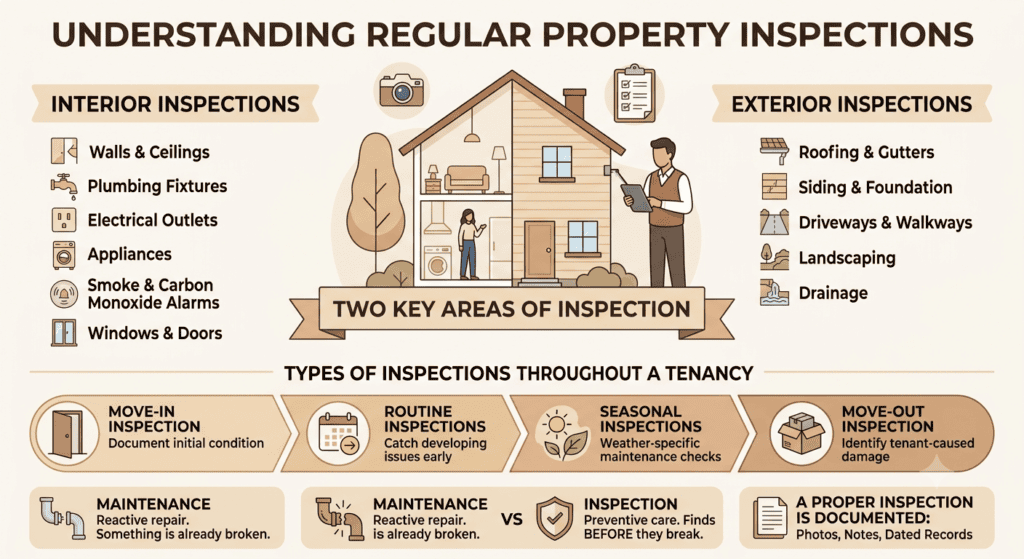
A property inspection is a scheduled, documented walkthrough of a rental unit to assess its condition, identify maintenance needs, and confirm the property is being cared for properly. It is not the same as a repair visit, and it is not the same as dropping by unannounced because something feels off.
Regular property inspections generally cover two areas:
- Interior inspections – walls, floors, ceilings, plumbing fixtures, electrical outlets, appliances, smoke and carbon monoxide alarms, windows, and doors.
- Exterior inspections – roofing, gutters, siding, foundation, driveways, walkways, landscaping, and drainage.
There are also several distinct types of inspections landlords should be running throughout a tenancy:
- Move-in inspections document the condition of the unit before a tenant takes possession, protecting both parties if a dispute arises later.
- Routine inspections happen periodically throughout the tenancy to catch developing issues early.
- Seasonal inspections focus on weather-specific risks, like checking the furnace before winter or the eavestroughs before spring rains.
- Move-out inspections compare the unit’s condition against the move-in report to identify any tenant-caused damage.
It’s worth being clear about one distinction: a maintenance visit happens because something is already broken and needs fixing. An inspection happens to find problems before they become “something broken” in the first place. One is reactive. The other is preventive. The entire value of a strong inspection program comes from that difference.
A proper inspection also isn’t just a visual glance around the room. It’s a documented process. That means photos of every space, notes on anything that looks off, and a dated record that can be compared against the last visit. Without documentation, an inspection is really just an opinion – and opinions don’t hold up well if a dispute ever ends up in front of the Landlord and Tenant Board.
This is also why the timing of inspections matters as much as the inspections themselves. A move-in report that’s rushed or incomplete can’t protect a landlord months later when a tenant moves out and the unit shows unexplained damage. The same goes for routine inspections skipped during a “quiet” stretch of a tenancy – the quiet stretch is often exactly when small problems are developing unnoticed behind the walls, under the floors, and inside the mechanical systems that keep a property running.
Why Regular Property Inspections Matter
Catch Minor Problems Before They Become Major Repairs
Nearly every expensive repair a landlord faces started out as something small and easy to fix. A hairline crack around a bathtub. A slightly discoloured patch on a ceiling. A breaker that trips more often than it used to.
Here’s what routine, regular property inspections are specifically designed to catch early:
- Small leaks under sinks, around toilets, or behind washing machines, long before they rot subflooring or damage drywall.
- Roof issues like lifted shingles, cracked flashing, or granule loss, which are far cheaper to patch than to replace.
- Plumbing problems such as slow drains, corroded pipes, or failing shut-off valves.
- HVAC concerns, including dirty filters, strange noises, or inconsistent heating and cooling that signal a system working harder than it should.
- Moisture and mold, particularly in bathrooms, basements, and around window frames where ventilation is often poor.
- Electrical issues, including outdated wiring, overloaded outlets, or warm-to-the-touch panels that indicate a fire risk.
None of these problems announce themselves loudly at first. That’s exactly why a scheduled inspection – rather than waiting for a tenant complaint – is the only reliable way to catch them while they’re still cheap to fix.
Think about how each of these typically develops. A small leak under a bathroom sink doesn’t flood the room in one dramatic moment – it drips slowly, week after week, saturating the cabinet floor and eventually the subfloor beneath it. By the time a tenant notices a smell or a soft spot underfoot, the damage has already spread well past the original pipe fitting. The same pattern shows up with roofs: a single lifted shingle after a windstorm might let in a small amount of moisture that goes completely unnoticed from inside the unit, until a ceiling stain finally appears months later, by which point the insulation and possibly the framing underneath have already absorbed water.
HVAC systems follow a similar quiet decline. A dirty filter doesn’t just reduce airflow – it forces the blower motor to work harder for months, shortening the lifespan of a furnace or air conditioner that would otherwise last another five to ten years. Catching that during a routine inspection is a $20 filter swap. Catching it after the motor burns out is a full system replacement. Regular property inspections exist precisely to interrupt this pattern before it reaches the expensive stage.
Protect Your Property’s Long-Term Value
A rental property is an appreciating asset only if it’s maintained like one. Deferred maintenance doesn’t just cost money in emergency repairs – it quietly erodes the resale and rental value of the property itself.
Regular inspections help landlords:
- Prevent deterioration by catching wear and tear before it compounds.
- Preserve curb appeal, which directly affects how quickly a unit rents and at what price point.
- Extend the life of major building systems – roofs, furnaces, water heaters, and plumbing – by identifying strain before it causes premature failure.
- Reduce capital repair expenses, since replacing a full system is always more expensive than repairing a component.
Buyers, appraisers, and even mortgage lenders notice the difference between a well-maintained property and one that’s been neglected. A documented inspection history is a tangible asset when it’s time to refinance or sell.
The Niagara Region’s rental market has also shifted in ways that make this even more relevant right now. New rental supply has been entering markets like St. Catharines and Niagara Falls at a faster pace than in previous years, giving tenants more options and more leverage than they’ve had in a long time. In a market where good tenants can afford to be selective, a well-maintained property with a documented care history isn’t just protecting resale value – it’s a real factor in how quickly a unit rents and at what price. A property that looks and functions like it’s been cared for consistently simply competes better, both with prospective tenants and with future buyers.
Improve Tenant Satisfaction
Tenants notice how quickly and professionally a landlord responds to their living conditions, and that perception shapes how long they stay and how well they treat the property.
Regular property inspections support:
- Faster maintenance response, since issues are flagged before tenants even have to ask.
- Better communication, because inspections create a natural, low-pressure touchpoint between landlord and tenant.
- A safer living environment, with working smoke alarms, secure railings, and functioning locks confirmed on a schedule.
- Increased tenant trust, which translates into longer tenancies and fewer disputes.
In a rental market where good tenants have more options than they did a few years ago, this kind of consistency is a genuine competitive advantage, not a nice-to-have.
There’s a relationship dynamic here that’s easy to underestimate. Tenants who feel like their living conditions are actively looked after tend to report problems earlier and more openly, instead of letting frustration build until they’re ready to move out. A tenant who trusts that a reported issue will actually get addressed is far more likely to mention a small leak the first week it appears, rather than living with it silently for months out of the assumption that nothing will happen anyway. That single behavioural shift – tenants reporting problems early instead of tolerating them – is one of the most underrated benefits of a consistent inspection routine, because it turns tenants into an extra set of eyes on the property rather than a source of surprises.
Ensure Lease Compliance
Inspections also give landlords a legitimate, documented way to confirm that the terms of the lease are being followed. This includes checking for:
- Unauthorized occupants living in the unit outside the signed lease.
- Pets that violate a no-pet clause or exceed the number or type agreed upon.
- Smoking in units where it’s prohibited, which can cause lingering damage and odour.
- Property misuse, such as running an undisclosed business out of a residential unit.
- Illegal modifications, including unpermitted electrical work, removed walls, or altered plumbing.
Catching these issues early through a routine inspection is far less disruptive – for both parties – than discovering them after significant damage or a lease violation has already occurred.
It’s worth noting that lease compliance checks during an inspection are about protecting the property and the terms both parties agreed to – not about micromanaging a tenant’s life. An inspection isn’t the moment to scrutinize personal belongings or judge how someone keeps their home. It’s a focused check against specific, agreed-upon lease terms: is there evidence of an undisclosed pet, an occupant who was never added to the lease, or damage from an activity the lease prohibits. Keeping that boundary clear protects the tenant’s privacy and reasonable enjoyment of the unit while still giving the landlord a legitimate way to confirm the lease is being honoured.
Reduce Emergency Maintenance Costs
Preventive maintenance is, almost without exception, cheaper than emergency repair. A small fix caught during a scheduled inspection might cost a fraction of what the same issue costs once it becomes a full-blown emergency.
Consider a simple example: a $50 washer replacement on a dripping supply line today versus the same leak left unaddressed for months. That slow drip can saturate subflooring, promote mold growth, and damage a ceiling below – turning into a repair bill in the thousands once drywall, flooring, and remediation are factored in.
This isn’t a hypothetical exaggeration. Water damage and freezing consistently rank among the most common and costly categories of property insurance claims in Canada, and insurers have noted a sharp rise in the cost of weather- and water-related repairs in recent years. A single water damage claim can also raise a property’s insurance premiums well into the following year, adding an ongoing cost on top of the repair itself. Regular inspections are one of the most effective ways to avoid becoming part of that statistic.
Common Problems Property Inspections Reveal
Even well-cared-for properties develop issues over time. A thorough inspection routinely uncovers:
- Water leaks around fixtures, appliances, and roofing – often the single most costly category of damage if left unaddressed.
- Mold growth in bathrooms, basements, and poorly ventilated spaces, which can develop within just a couple of days of unresolved moisture.
- Pest infestations, including signs of rodents or insects, which are usually easier to identify from droppings or entry points than from the pests themselves.
- Roof damage from wind, ice, or age-related wear, especially after major storm events common in the Niagara Region’s lake-effect weather.
- HVAC issues affecting heating, cooling, or air quality, frequently traced back to a filter that was never replaced.
- Plumbing problems such as slow drains or pipe corrosion, particularly in older housing stock common throughout Niagara Falls and St. Catharines.
- Broken or expired smoke detectors, a safety issue with legal consequences under Ontario’s Fire Code.
- Electrical hazards, including faulty outlets or overloaded circuits, which are among the leading causes of residential fires.
- Foundation cracks that may indicate settling or water infiltration, sometimes visible only from specific angles or after rainfall.
- Appliance damage or malfunction, which can escalate into water or fire risk if a washing machine hose or dryer vent isn’t checked.
- Drainage issues around the exterior that can lead to basement flooding, especially where landscaping grading has shifted over time.
- Exterior deterioration, including siding, fencing, and paint, which affects both curb appeal and the building envelope’s ability to keep moisture out.
Each of these items is manageable on its own. Left unchecked for a year or more, several of them tend to compound into something far more disruptive – and expensive – to resolve. A cracked foundation left unaddressed, for instance, often invites the exact moisture problems that later show up as mold. A neglected gutter doesn’t just look bad; it redirects water toward the foundation and accelerates the very drainage issues listed above. Inspections work best when they’re treated as connected checkpoints across the whole property, not a list of unrelated boxes to tick.
How Often Should Rental Properties Be Inspected?
There’s no single answer that fits every property, but a reasonable, defensible schedule for most Ontario rentals looks like this:
- Move-in inspection: Always, before the tenant takes possession, with photos and a signed condition report.
- Routine inspections: Commonly every 3 to 6 months, though this should always be shaped by your specific lease terms and applicable local laws.
- Seasonal inspections: At minimum, once before winter (furnace, weatherstripping, roof) and once in spring (eavestroughs, drainage, exterior).
- Move-out inspections: Always, compared directly against the move-in documentation.
- Emergency inspections: As needed, whenever a tenant reports a safety concern or visible damage.
It’s essential to stay within the legal boundaries for entering an occupied rental unit. Under Ontario’s Residential Tenancies Act, landlords must generally provide at least 24 hours’ written notice before entering a unit for an inspection, and entry is only permitted between 8 a.m. and 8 p.m., except in genuine emergencies. The notice needs to state a valid reason and a specific time or time window – vague or overly broad windows have been challenged successfully at the Landlord and Tenant Board. Getting this part wrong doesn’t just create tenant friction; it can expose a landlord to a real complaint, so following the notice rules to the letter is non-negotiable.
The exact frequency that makes sense for a given property depends on a few factors worth weighing honestly. A newer building with modern systems and a long-term, low-turnover tenant may need less frequent routine checks than an older character home with aging plumbing and a furnace nearing the end of its expected lifespan. Properties with a history of maintenance issues, or units where a landlord suspects a lease term isn’t being followed, may warrant more frequent visits, provided the proper notice is always given. There’s also a balance to strike: inspecting too frequently can itself become a source of tenant friction, even when every notice is technically compliant. The Landlord and Tenant Board has been clear that landlords should limit the frequency of entries to what’s actually necessary, rather than scheduling visits more often than the property genuinely requires.
Property Inspection Checklist for Landlords
A consistent checklist is what separates a useful inspection from a quick walkthrough that misses half the property. It also gives every inspection the same structure, so a landlord – or a property manager – can compare one visit against the next and actually notice when something has changed. Here’s a practical starting point.
Exterior
- Roof (shingles, flashing, visible sagging)
- Gutters and downspouts (clogs, secure attachment)
- Driveway (cracking, drainage, tripping hazards)
- Landscaping (overgrowth, drainage away from the foundation)
- Windows (seals, caulking, functioning locks)
- Doors (weatherstripping, secure frames, working locks)
- Siding (cracks, discoloration, pest entry points)
- Foundation (visible cracks, moisture staining)
Interior
- Walls (cracks, water stains, holes)
- Floors (warping, soft spots, wear)
- Ceiling (staining, sagging, cracks)
- Plumbing (leaks, water pressure, drain speed)
- Electrical (outlet function, panel condition, exposed wiring)
- Smoke detectors (battery life, expiry date, placement)
- HVAC (filter condition, unusual noise, consistent airflow)
- Appliances (function, seals, visible wear)
- Bathrooms (grout, caulking, ventilation, fixture function)
- Kitchen (cabinet condition, appliance function, under-sink plumbing)
Keeping this checklist consistent across every visit – rather than improvising each time – is what makes the resulting documentation actually useful later, whether for maintenance planning, insurance purposes, or a future LTB matter. It’s also worth keeping a simple running log alongside the checklist itself: the date of each inspection, who conducted it, what was found, and what action was taken. That single habit turns a folder of photos into an actual maintenance history – the kind of record that matters most when it’s needed.
Benefits of Hiring a Professional Property Management Company
Many landlords start out doing their own inspections and quickly find the schedule slips once life gets busy. This is exactly where a professional property management company earns its value. A dedicated team will:
- Schedule inspections consistently, without the gaps that happen when a landlord is juggling a full-time job and other properties.
- Document findings with photos, creating a clear record for every visit rather than relying on memory.
- Coordinate maintenance directly with trusted contractors, closing the loop between finding a problem and fixing it.
- Track recurring issues across multiple inspections, catching patterns an occasional visit would miss.
- Maintain detailed inspection records, which protect landlords in the event of a dispute or insurance claim.
- Communicate with tenants professionally, reducing friction and preserving the landlord-tenant relationship.
- Help protect the property’s long-term value, through the cumulative effect of consistent, documented care.
This is the core of what The HAH Developments provides across the Niagara Region. Our property management clients don’t have to remember to schedule an inspection or chase down a contractor – it’s built into how we manage every property under our care, alongside our long-term rental management, short-term rental management, and Airbnb hosting services.
This matters even more for owners who don’t live near their rental property, or who own more than one unit. It’s one thing to promise yourself you’ll check on a property every few months. It’s another thing entirely to actually follow through once a busy season, a family emergency, or simple forgetfulness gets in the way. A property management company removes that dependency on personal willpower and replaces it with a system that runs on schedule regardless of what else is happening in an owner’s life.
Mistakes Landlords Make During Property Inspections
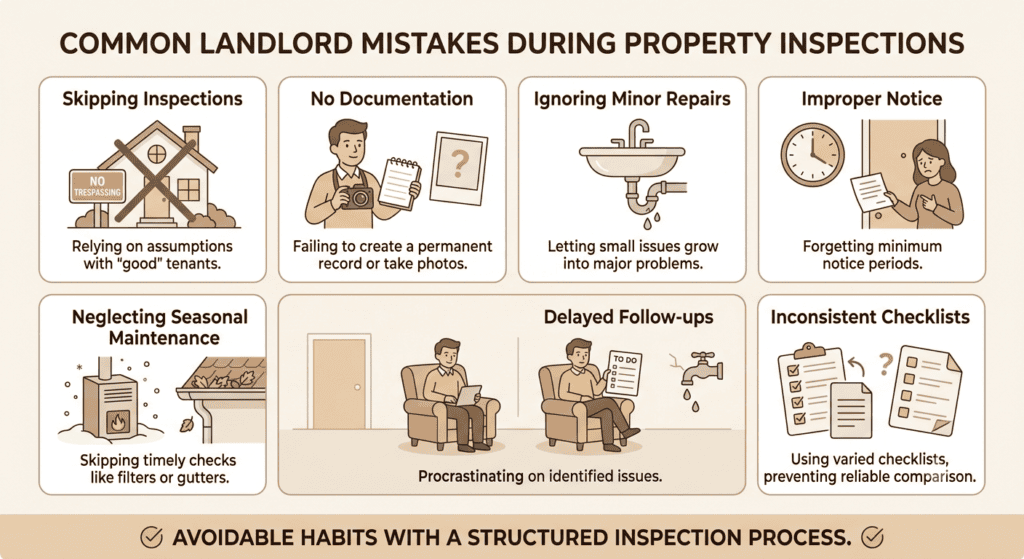
Even landlords who understand the value of inspections often undermine their own efforts. The most common mistakes include:
- Skipping inspections when a tenant seems reliable, assuming no news means no problems.
- Not documenting findings, which leaves no record to reference later or use in a dispute.
- Ignoring minor repairs flagged during an inspection, letting small issues sit until they grow.
- Failing to provide proper notice, risking a legitimate tenant complaint and potential LTB action.
- Forgetting seasonal maintenance, such as furnace checks before winter or gutter clearing before spring.
- Delaying follow-up repairs even after an issue has already been identified.
- Using inconsistent inspection checklists, which means different visits catch different things and nothing gets compared reliably over time.
Every one of these mistakes is avoidable with a structured, repeatable process – which is precisely the gap that a professional inspection program is designed to close. What’s notable about this list is that none of these are complicated fixes. They’re habits. A landlord doesn’t need special training to document a visit with photos or provide proper written notice – they just need a system that makes doing it the default, rather than something that depends on remembering in the moment.
Best Practices for Effective Property Inspections
Landlords who get the most value out of their inspection program tend to follow the same core habits:
- Use a standardized checklist for every visit, so nothing gets missed and results are comparable over time.
- Take timestamped photos of every room and any noted issue.
- Document every visit, even when nothing appears wrong – the pattern of “no issues found” is itself valuable evidence.
- Address maintenance promptly once an issue is flagged, rather than letting it sit until the next visit.
- Keep communication professional, giving tenants clear notice and a respectful explanation of what to expect.
- Respect tenant privacy, limiting entry to the agreed time window and avoiding unnecessary intrusion into personal belongings.
- Maintain inspection records for future reference, whether for maintenance planning, insurance documentation, or a future tenancy dispute.
None of these practices require special tools or expensive software. A shared folder of dated photos, a simple spreadsheet log, and a calendar reminder are enough to run a reliable inspection program for a single property. The habit matters far more than the technology behind it – consistency is what turns an inspection from a one-off event into an actual protective system for the investment.
Conclusion
Regular property inspections aren’t an expense – they’re one of the most effective investments a landlord can make. A consistent inspection program identifies maintenance issues while they’re still small, reduces the risk of costly emergency repairs, improves tenant satisfaction, supports lease compliance, and protects the long-term value of the property itself.
The landlords who avoid the painful surprise repairs aren’t the lucky ones. They’re the ones with a system.
If you own rental property in the Niagara Region and want that system built for you, The HAH Developments can help. Our property management team handles scheduled inspections, documentation, and maintenance coordination so you can enjoy the income from your investment without carrying the day-to-day burden of protecting it. Reach out to The HAH Developments today to find out how proactive property management can protect your rental property for years to come.
Frequently Asked Questions
How often should a landlord inspect a rental property in Ontario?
Most landlords schedule routine inspections every three to six months, in addition to move-in, move-out, and seasonal checks. The right frequency depends on the property, the lease terms, and applicable local regulations.
How much notice does a landlord need to give before an inspection in Ontario?
Under the Residential Tenancies Act, landlords generally must provide at least 24 hours’ written notice, and entry must occur between 8 a.m. and 8 p.m., except in an emergency.
Can a tenant refuse a scheduled inspection?
A tenant cannot unreasonably refuse entry when proper written notice has been given for a legitimate purpose, such as a routine inspection or repair. If the notice doesn’t meet the legal requirements, the tenant may have grounds to refuse or reschedule.
What should a landlord do if an inspection reveals a lease violation?
Document the issue with photos and written notes, then address it directly with the tenant. Depending on the severity, this may involve a written warning or, in serious cases, formal action through the Landlord and Tenant Board.
Do property inspections help with insurance claims?
Yes. A documented history of regular inspections and prompt repairs can support a stronger insurance claim, since insurers may scrutinize whether damage resulted from neglect versus an unavoidable event. Given how sharply the cost of weather- and water-related repairs has climbed in recent years, and how quickly a single claim can raise ongoing premiums, that documentation is worth far more than the time it takes to keep it.
Is it worth hiring a property management company just for inspections?
For landlords with multiple properties, out-of-town ownership, or limited time, professional inspection management often pays for itself by catching problems early and keeping detailed records that protect the investment long-term.