

Most landlords assume there’s only one way to make more money from a rental property: raise the rent. It seems logical on paper. Charge more, collect more, right?
In practice, it’s rarely that simple.
A rent increase can push a reliable, long-term tenant to start looking elsewhere. And once that tenant gives notice, the real cost shows up – the weeks of lost rent, the cleaning, the repairs, the photography, the showings, the new lease paperwork, and the risk that the next tenant isn’t nearly as good as the one who just left.
That’s the part most owners underestimate. A vacant unit doesn’t just cost you the missing rent check. It costs you utilities, marketing, staff or agent time, and often a discount just to get someone to sign quickly. Industry data consistently shows that turnover can eat up anywhere from half a month’s rent to three full months once every hidden cost is added up, and property managers report that a single move-out on a mid-priced unit can easily run into the thousands of dollars once vacancy, repairs, and re-leasing are all factored in.
So before you send another rent increase notice, it’s worth asking a different question: how can you increase rental income without raising rent – or at least without leaning on rent hikes as your only lever?
The answer usually comes down to three things: running the property more efficiently, improving the tenant experience so good renters stay longer, and building smart, optional revenue streams that tenants are genuinely happy to pay for. This guide walks through 11 practical ways to do exactly that, with real numbers, current trends, and strategies you can start using this year.
Why Raising Rent Can Sometimes Reduce Your Overall Profit
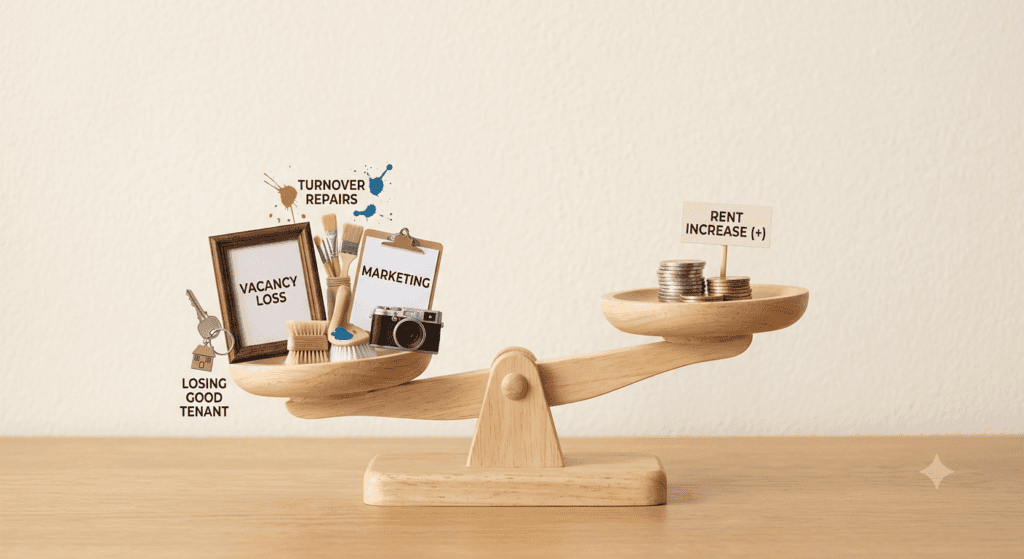
It feels counterintuitive, but a rent increase can shrink your net income instead of growing it. Here’s why.
Vacancy costs more than most landlords expect. Rental vacancy rates in North America have been trending upward, with national figures sitting around 7% in early 2026 – meaning a meaningful share of rental units are sitting empty at any given time. Every week a unit stays vacant is a week of zero income while your mortgage, insurance, property taxes, and utilities keep running.
Turnover expenses add up fast. Studies on turnover costs put the average somewhere between $2,000 and $5,000 per unit once you include lost rent, cleaning, repairs, marketing, and administrative time – and that’s before factoring in larger repairs like flooring or appliance replacement. On a $2,000/month unit, even three weeks of vacancy alone works out to roughly $1,500 in lost income before a single repair bill arrives.
Cleaning and repair costs are rarely optional. Between tenants, most units need at least a deep clean, paint touch-ups, and minor repairs. Even a modest turnover commonly runs $1,000 to $1,200 in repair work alone.
Marketing and leasing take real time and money. Professional photography, listing fees, and the hours spent showing a unit and screening applicants all cost money whether you do it yourself or pay someone else to.
You risk losing a reliable, long-term tenant for an unproven one. A tenant who pays on time, treats your property well, and never causes problems has real value that doesn’t show up on a rent roll. Replacing that tenant with an unknown quantity is a gamble, and if the new tenant turns out to be difficult, the cost of that mistake can dwarf whatever extra rent you were chasing.
For 2026, Ontario landlords also need to keep the province’s rent increase guideline in mind. The Ontario government set the 2026 guideline at 2.1% – the lowest cap in four years – for most units first occupied on or before November 15, 2018. Any increase above that requires an Above Guideline Increase application to the Landlord and Tenant Board, and even then, increases are typically capped around 5.1% total and spread over multiple years. In other words, even landlords who want to raise rent have limited room to do so legally. That makes it even more valuable to have other ways to grow income.
None of this means rent increases are never appropriate. It means they shouldn’t be your only strategy. The landlords who do best over the long run treat rent increases as one tool among several, not the whole toolbox.
1. Upgrade the Property With High-ROI Improvements
You don’t need a full renovation to increase rental income without raising rent. Small, targeted upgrades often deliver a bigger return than a gut renovation, and they help justify market-rate rent when a unit does turn over.
Cost-Effective Upgrades With Strong Payback
- Fresh paint – A neutral, modern paint job is one of the cheapest ways to make a unit feel new again, and it photographs far better for listings.
- Modern lighting fixtures – Swapping outdated fixtures for simple, contemporary ones is inexpensive and instantly changes how a space feels.
- New cabinet handles – Updated hardware in the kitchen and bathroom is a low-cost way to make older cabinetry look current.
- Durable, low-maintenance flooring – Laminate or luxury vinyl plank holds up better than carpet, looks more modern, and cuts down on cleaning costs between tenants.
- Smart thermostats – These typically cost under $200 installed, appeal strongly to renters who value convenience and lower utility bills, and can pay for themselves within a year or two.
- Energy-efficient appliances – Newer appliances reduce maintenance calls, lower utility costs, and are consistently one of the top features renters look for.
The goal isn’t to over-improve a property beyond what the local market supports. It’s to make targeted changes that increase perceived value, reduce ongoing maintenance costs, and help your unit stand out – all without triggering the turnover risk that comes with a straight rent hike.
2. Offer Premium Amenities Tenants Are Happy to Pay For
This is one of the most effective ways to increase rental income without raising rent, because it shifts the extra cost from mandatory to optional. Tenants who want the upgrade pay for it. Tenants who don’t, aren’t forced into a higher base rent.
Amenities worth considering include:
- Reserved or covered parking – especially valuable in denser neighbourhoods where street parking is limited.
- Private storage units or lockers – a small monthly add-on that solves a real problem for tenants with limited closet space.
- High-speed internet bundled into the lease – convenient for tenants and can be marked up modestly if you negotiate a bulk rate with a provider.
- In-unit laundry – consistently one of the top-requested features among renters and a strong differentiator from competing listings.
- Smart locks and keyless entry – appeals to safety-conscious tenants and reduces the cost and hassle of re-keying between tenants.
- EV charging stations – increasingly requested in markets with higher electric vehicle adoption, and a genuine differentiator for a small number of competing units.
The key is positioning these as optional upgrades rather than folding the cost into everyone’s base rent. That keeps your listed rent competitive while still growing total revenue from tenants who want the extra convenience.
3. Turn Unused Spaces Into Extra Income
Look at your property with fresh eyes. Is there space that isn’t earning anything?
- Basement storage rentals – Extra square footage in a basement or utility area can be rented out separately as storage.
- Bike storage – A secure rack or small room, especially valuable in walkable or transit-friendly neighbourhoods.
- Garage rentals – If your property has a garage that isn’t included in the lease, it can be rented separately, even to non-tenants.
- Parking space rentals – Extra driveway or lot space can be rented monthly, particularly in areas with limited street parking.
- Locker rentals – Small, secure storage lockers in a shared building area are a low-effort, high-margin add-on.
None of these require major construction. Most just require organizing space you already own and putting a small, fair price on it. Over a year, several small add-ons like these can add up to a meaningful boost in total property income.
4. Become a Pet-Friendly Rental (With Clear Policies)
Pet-friendly rentals aren’t just a nice gesture – they’re one of the strongest income and retention levers available to landlords right now.
The numbers make the case clearly. Roughly 58% of renter households report having a pet, and demand for pet-friendly units has grown steadily over the past several years. In competitive markets, pet-friendly listings routinely rent faster and draw more interest than comparable pet-free units – in some major markets, pet-friendly listings have leased more than three weeks faster than units that don’t allow pets. Beyond faster leasing, pet-inclusive policies have been shown to improve tenant retention meaningfully, with pet owners staying significantly longer on average than non-pet-owning tenants.
A larger tenant pool. With well over half of renters owning a pet, a strict no-pets policy automatically excludes a huge share of prospective tenants – often the most stable, long-term ones.
Pet fees, where legally permitted. Depending on your jurisdiction, you may be able to charge a modest monthly pet fee or a refundable pet deposit to offset potential wear and tear. Check local and provincial rules before implementing any pet-related charges.
Small pet amenities go a long way. A simple waste station or a note in your listing about nearby dog parks and walking trails can make your property stand out without any real construction cost.
Responsible policies protect your property. Being pet-friendly doesn’t mean having no rules. Reasonable, clearly written pet policies – covering vaccination records, leash rules, and a defined process for reporting damage – let you say yes to pets while still protecting your investment.
If you’ve been avoiding pets out of concern for damage, it’s worth knowing that most pet-owning tenants report no property damage at all, and among those who do report some damage, the vast majority describe it as minor. For many landlords, the wider tenant pool and longer average tenancy more than offset the modest risk.
5. Reduce Vacancy Between Tenants
Every day a unit sits empty is a day of pure lost income. Reducing the time between tenants is one of the fastest ways to increase rental income without raising rent, because it recovers money you’re already losing.
Faster maintenance turnaround. The quicker you can get a unit repaired, cleaned, and ready to show, the sooner you can start collecting rent again. Lining up reliable contractors in advance – rather than scrambling after a tenant gives notice – cuts days or weeks off your vacancy window.
Professional photography. Listings with high-quality photos consistently attract more views and inquiries than those with phone snapshots. This is a small upfront cost that shortens your vacancy period.
Competitive, accurate listings. Pricing a unit slightly below market for a week or two to secure a good tenant quickly is often more profitable than holding out for top dollar and losing a month to vacancy.
Streamlined tenant screening. A fast, organized screening process (credit checks, income verification, rental history) lets you move qualified applicants to signing faster, without cutting corners on due diligence.
Pre-marketing before a lease expires. If a tenant gives 60 or 90 days’ notice, start marketing immediately rather than waiting until the unit is actually vacant. This is one of the simplest ways to shrink or even eliminate a vacancy gap entirely.
One month of vacancy can wipe out the equivalent of an entire year’s worth of a modest rent increase. Treating vacancy reduction as a priority – not an afterthought – protects income far more reliably than chasing the highest possible rent on paper.
6. Keep Great Tenants Longer
Tenant retention is quietly one of the most profitable strategies in property management, because a renewed lease costs you almost nothing compared to a full turnover.
Responsive communication. Tenants who feel heard are far more likely to renew. A quick reply to a maintenance request or a general question builds goodwill that pays off at renewal time.
Preventive maintenance. Catching small issues – a slow leak, an aging appliance, a worn weatherstrip – before they become emergencies keeps tenants happy and avoids costly last-minute repairs.
Lease renewal incentives. A small gesture, like a minor upgrade, a appliance tune-up, or a modest gift card, can be far cheaper than the cost of finding a new tenant, and it signals that you value the relationship.
Regular property inspections. Scheduled, respectful inspections help you catch maintenance issues early and reinforce that you’re an attentive, professional landlord.
Respectful, professional landlord-tenant relationships. Simple things – giving proper notice before entering, following through on promises, treating tenants fairly – build the kind of trust that keeps good tenants from even looking at other listings when their lease comes up.
Retention isn’t just a “nice to have.” It’s a direct financial strategy. Keeping one good tenant for an extra two or three years, instead of cycling through two or three new tenants in that time, can be worth thousands of dollars in avoided turnover costs alone.
7. Lower Operating Costs to Increase Net Rental Income
It’s easy to focus only on gross rent, but net rental income – what’s actually left after expenses – is what really matters. Lowering costs is just as effective as raising revenue, and it doesn’t require any tenant-facing change at all.
Preventative maintenance. Regular HVAC servicing, gutter cleaning, and appliance checks are far cheaper than emergency repairs and extend the life of expensive systems.
Utility efficiency. Upgrading to efficient lighting, fixtures, and appliances lowers utility costs, whether you’re paying them directly or trying to keep tenants’ bills manageable in a bundled-rent arrangement.
Vendor negotiations. Building relationships with a few trusted contractors and negotiating rates for recurring work (landscaping, snow removal, cleaning) often beats calling a new provider every time something comes up.
Scheduled inspections. Catching issues during routine inspections is almost always cheaper than dealing with the same issue once it’s become an emergency.
Automation software. Property management software for rent collection, maintenance requests, and tenant communication reduces the hours you or your team spend on administrative work, which is a real cost even if it doesn’t show up as a line-item expense.
It’s worth remembering the difference between gross and net rental income. Gross income is simply the total rent collected. Net income is what remains after mortgage payments, property taxes, insurance, maintenance, management fees, and vacancy losses. A property with slightly lower gross rent but tightly controlled expenses can easily out-earn a property charging premium rent with high operating costs.
8. Bundle Optional Convenience Services
Busy tenants – especially professionals, remote workers, and those relocating for work – are often willing to pay extra for convenience. Where local regulations allow, consider offering optional bundled services such as:
- Cleaning services for tenants who want a professionally maintained home without the hassle.
- Lawn care for single-family rentals, which also protects your curb appeal and property value.
- Snow removal, particularly valuable in Ontario winters where tenants often appreciate not having to shovel before work.
- Furniture packages for shorter-term or relocating tenants who don’t want to buy and move furniture.
- Appliance rentals for tenants who prefer not to purchase their own washer, dryer, or other large appliances.
These services work best as clearly optional add-ons, priced transparently, and only where they comply with local landlord-tenant regulations. Done well, they create an additional revenue stream while genuinely improving the tenant experience – a win on both sides.
9. Invest in Energy Efficiency
Energy-efficient upgrades pay off in two ways: they reduce your operating costs, and they make your property more attractive to today’s renters, many of whom actively look for lower utility bills.
- LED lighting throughout common areas and units, which uses a fraction of the electricity of older bulbs and rarely needs replacing.
- Low-flow fixtures in bathrooms and kitchens to reduce water usage and utility costs.
- Better insulation, which keeps heating and cooling costs down and improves tenant comfort year-round.
- Smart thermostats, which let tenants manage their own comfort and energy use more efficiently.
- Energy-efficient windows, a larger investment but one that meaningfully cuts heating and cooling costs while reducing drafts and noise – both are genuine selling points on a listing.
These upgrades tend to have a long payback period compared to something like fresh paint, but they compound over time: lower utility bills, fewer maintenance issues, stronger appeal in listings, and in many cases, a genuine environmental benefit that resonates with younger renters in particular.
10. Work With a Professional Property Management Company
Every strategy in this guide takes time, market knowledge, and consistent follow-through to execute well. That’s exactly where a professional property management partner earns its keep.
A strong property management company can:
- Reduce vacancy through faster turnovers, sharper pricing, and wider marketing reach.
- Improve tenant retention with responsive communication and proactive maintenance.
- Optimize maintenance by leveraging established vendor relationships and preventive scheduling.
- Market properties effectively, using professional photography and listing strategies that get more qualified inquiries.
- Identify overlooked income opportunities, from underused storage space to amenity bundling, that many self-managing landlords simply don’t have time to spot.
This is where The HAH Developments comes in. As a property management partner specializing in both long-term and short-term rentals – including Airbnb hosting and co-hosting, rental arbitrage, and full-service property care – The HAH Developments helps property owners apply exactly the kind of strategies covered in this guide, without adding it to their own to-do list. From reducing vacancy and improving guest and tenant experience to protecting long-term property value, the goal is always the same: help owners earn more from what they already have, stress-free.
If you’re spending your evenings chasing maintenance requests or wondering why a unit has sat empty for three weeks, that’s usually a sign it’s time to bring in professional support.
11. Mistakes Landlords Should Avoid
Even well-intentioned landlords can undercut their own income with a few common missteps.
- Raising rent without market research. Increasing rent above what comparable units are charging almost guarantees turnover – and in Ontario, increases above the annual guideline require formal Landlord and Tenant Board approval in most cases.
- Over-renovating for the market. Spending heavily on finishes a neighbourhood’s rent levels can’t support means you’ll never recover the investment through rent alone.
- Charging unnecessary or excessive fees. Nickel-and-diming tenants with fees that feel unfair breeds resentment and drives turnover, even if each individual fee seems small.
- Ignoring tenant feedback. Recurring complaints about noise, maintenance, or communication are early warning signs of a non-renewal. Listening early is far cheaper than losing the tenant later.
- Delaying repairs. Small issues left unaddressed tend to become bigger, more expensive ones – and they erode trust with tenants in the meantime.
- Neglecting lease compliance. Missing notice periods, using outdated forms, or skipping required documentation can invalidate a rent increase entirely or expose you to disputes at the Landlord and Tenant Board.
Avoiding these mistakes is, in many ways, just as valuable as actively pursuing new income strategies. Protecting the income you already have is the foundation everything else builds on.
Conclusion
Raising rent isn’t the only lever available to landlords – and often, it isn’t even the most profitable one. From high-ROI upgrades and optional amenities to reducing vacancy and keeping great tenants longer, there are dozens of ways to increase rental income without raising rent and without risking the relationship with tenants who are already paying reliably and taking care of your property.
The most successful landlords in 2026 aren’t the ones chasing the highest possible rent on paper. They’re the ones running efficient, well-maintained properties, staying responsive to tenants, and looking for smart, sustainable ways to grow income alongside tenant satisfaction – not at its expense.
If you’re ready to see what your property could be earning without the stress of managing it all yourself, The HAH Developments is here to help. From long-term rental management to Airbnb co-hosting and full property care, our team specializes in maximizing rental income while protecting your investment and your peace of mind. Contact The HAH Developments today to find out how much more your property could be earning.
Frequently Asked Questions
Can I increase rental income without raising monthly rent?
Yes. Strategies like offering optional premium amenities, renting out unused space, becoming pet-friendly, reducing vacancy, and lowering operating costs can all grow your total income without touching your base rent.
What upgrades provide the best return on investment?
Smaller, targeted upgrades – fresh paint, updated lighting and hardware, durable flooring, and smart thermostats – typically deliver a stronger return than large-scale renovations, especially in markets where rents can’t fully absorb the cost of a major remodel.
Do amenities help increase rental profitability?
Yes. Optional amenities like reserved parking, in-unit laundry, or private storage let tenants pay extra for what they value most, without raising the base rent for everyone. This keeps your listed rent competitive while still growing total revenue.
How does reducing vacancy improve rental income?
Vacancy is one of the largest hidden costs in property ownership. A single month of lost rent can offset a full year’s worth of a modest rent increase, so shortening the time between tenants – through faster maintenance, better marketing, and pre-marketing before lease expiry – has an outsized impact on annual income.
Is hiring a property management company worth it?
For many owners, yes. A professional property manager brings market knowledge, vendor relationships, and consistent follow-through that’s difficult to replicate while self-managing, particularly for owners with more than one property or limited time to dedicate to day-to-day operations.