A landlord notices that the furnace filter hasn’t been changed in months. It looks dirty, but the heating system is still running, so they decide to deal with it later. Fast forward to the middle of winter, and the furnace suddenly fails. What could have been a simple $50 maintenance job has now turned into a repair bill worth thousands of dollars-not to mention an unhappy tenant and the stress of arranging an emergency repair in freezing temperatures.
This is the reality of reactive property maintenance. Waiting until something breaks almost always costs more than preventing the problem in the first place.
Whether you own one rental property or manage a growing portfolio, having a structured rental property maintenance checklist is one of the smartest investments you can make. Regular inspections not only protect your property’s value but also reduce unexpected expenses, improve tenant satisfaction, and help you stay compliant with Ontario’s landlord regulations.
Industry research consistently shows that preventive maintenance can reduce repair costs by nearly 30%, while every dollar invested in planned maintenance may save $4–$6 in emergency repairs over time. Emergency repairs also tend to cost three to five times more than scheduled maintenance because they often require urgent labour, expedited parts, and additional damage restoration.
In Ontario, maintenance isn’t simply considered good business practice-it’s a legal responsibility. Under the Residential Tenancies Act (RTA), landlords are required to keep rental units in a good state of repair and ensure that essential services like heat, water, and electricity remain available, regardless of what the lease agreement says.
The good news? Staying ahead of maintenance doesn’t have to be overwhelming.
This guide walks you through a practical, season-by-season maintenance checklist designed specifically for Ontario landlords. You’ll also learn how much to budget for annual maintenance, understand your legal obligations, discover what responsibilities belong to tenants, and know when it makes sense to bring in a professional property management company.
By the end, you’ll have a maintenance plan that helps protect your investment, keeps tenants happy, and significantly reduces costly surprises.
Why Every Landlord Needs a Rental Property Maintenance Checklist
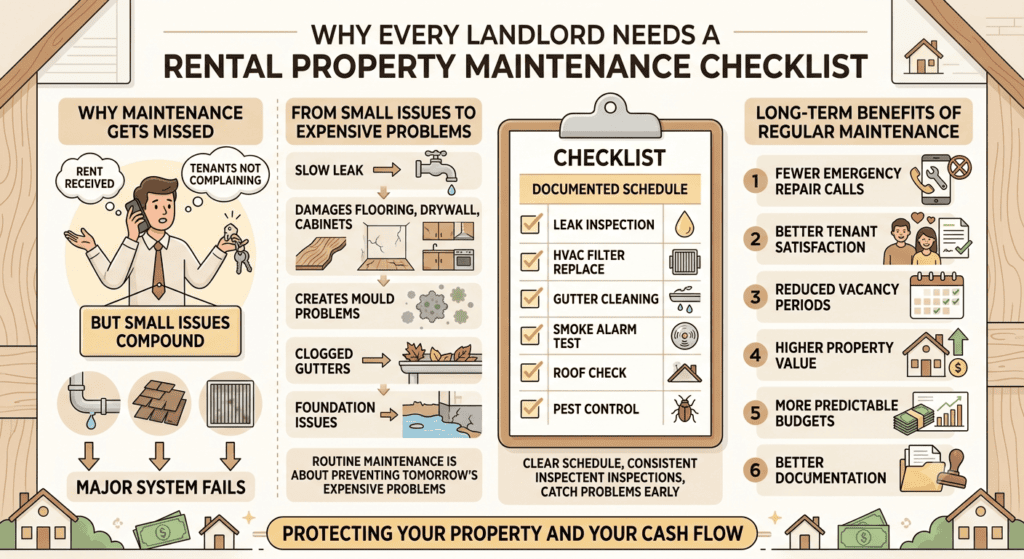
Many landlords don’t ignore maintenance because they want to-they simply get busy. A small plumbing drip, loose shingles, or an HVAC filter replacement doesn’t seem urgent when rent is coming in and tenants aren’t complaining.
Unfortunately, rental properties rarely give advance warning before a major system fails.
Small issues compound over time. A slow leak hidden beneath a sink can eventually damage flooring, drywall, cabinets, and even create mould problems. Gutters clogged during the fall can overflow in winter, causing foundation issues that cost thousands to repair. Routine maintenance is less about fixing today’s problems and more about preventing tomorrow’s expensive ones.
A documented maintenance checklist gives landlords a clear schedule instead of relying on memory. It ensures inspections happen consistently throughout the year, making it easier to catch problems while they’re still inexpensive to fix.
Beyond lowering repair costs, regular maintenance delivers several long-term benefits:
- Fewer emergency repair calls
- Better tenant satisfaction and lease renewals
- Reduced vacancy periods
- Higher property value
- More predictable maintenance budgets
- Better documentation if legal disputes arise
Simply put, maintenance protects both your property and your cash flow.
The Reactive Premium: When a Small Problem Becomes an Expensive Emergency
Every landlord has heard stories like these:
- A missing roof shingle eventually causes a leaking ceiling.
- A neglected furnace filter burns out the HVAC system.
- A dripping faucet turns into water damage behind the walls.
- Poor drainage around the foundation leads to basement flooding.
None of these problems happen overnight.
The expensive repair bill usually begins with a relatively inexpensive maintenance task that was postponed for “next month.”
This hidden cost is what many property managers call the reactive premium-the additional money landlords pay because maintenance wasn’t completed when it should have been.
Preventive maintenance dramatically reduces this risk by identifying small issues before they escalate into major emergencies.
Maintenance Is More Than Good Practice-It’s Your Legal Responsibility
Many first-time landlords assume maintenance is optional as long as tenants don’t complain.
Ontario law says otherwise.
Under Ontario’s Residential Tenancies Act, landlords must maintain rental properties in a good state of repair, even if tenants agreed to rent the property “as-is.” This includes ensuring essential services such as heating, electricity, and water remain functional, along with maintaining the structural integrity and overall safety of the property.
Failing to address maintenance issues promptly can lead to complaints through the Landlord and Tenant Board (LTB), rent abatements, repair orders, or other legal consequences.
A documented maintenance schedule demonstrates that you’ve taken reasonable steps to inspect and maintain your property. If a dispute ever reaches the LTB, dated inspection reports, repair invoices, contractor receipts, and photographs can become valuable evidence that you’ve fulfilled your responsibilities.
While this article provides general information rather than legal advice, it’s always wise to stay updated with current Ontario regulations or consult a qualified property management professional if you’re unsure about specific maintenance obligations.
Benefits of Preventive Rental Property Maintenance
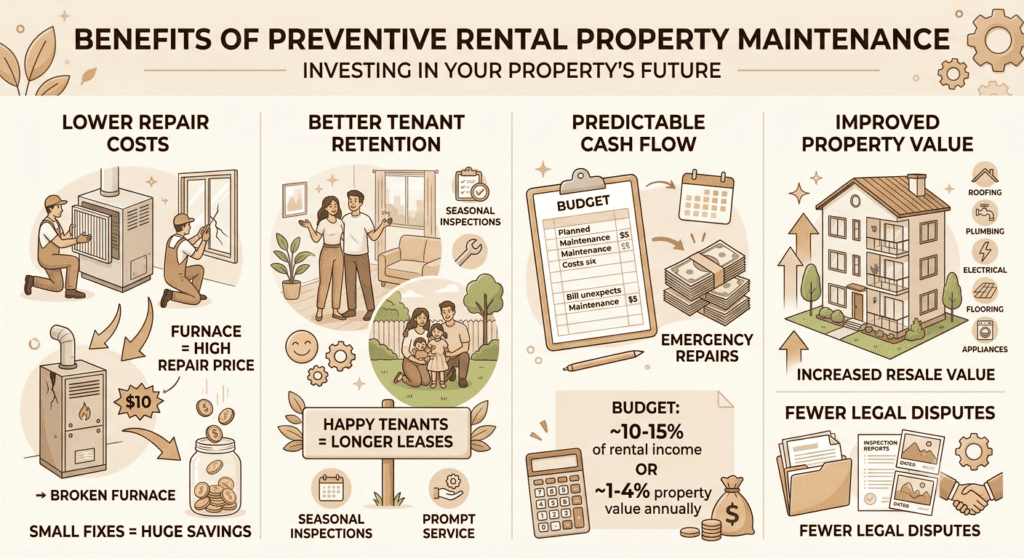
Preventive maintenance isn’t an expense-it’s one of the best investments a landlord can make.
Lower Repair Costs
Routine servicing helps identify problems while they’re still manageable. Replacing an HVAC filter or sealing a small crack today is significantly cheaper than replacing an entire heating system or repairing structural damage later.
Better Tenant Retention
Tenants notice when a property is well cared for. Prompt repairs, seasonal inspections, and regular maintenance create a better living experience, making quality tenants more likely to renew their leases and recommend your property to others.
Predictable Cash Flow
One of the biggest challenges for landlords is dealing with unexpected expenses. Preventive maintenance allows you to budget more accurately throughout the year instead of facing multiple emergency repairs at once.
A common industry guideline is to budget approximately 1–4% of your property’s value annually for maintenance or roughly 10–15% of gross rental income, depending on the property’s age and condition.
Improved Property Value
Well-maintained properties naturally retain their value better than neglected ones. Regular maintenance protects roofing, plumbing, electrical systems, flooring, landscaping, and appliances-all of which contribute to stronger resale value and higher appraisals.
Fewer Legal Disputes
Regular inspections and documented repairs reduce misunderstandings with tenants. If issues arise, having maintenance records, inspection reports, and dated photographs can make resolving disputes much easier.
Spring Rental Property Maintenance Checklist
Winter can be tough on any property. Snow, freezing temperatures, and repeated freeze-thaw cycles often leave behind hidden damage that isn’t obvious until spring arrives. That’s why spring is the perfect time for a thorough inspection before minor issues become expensive repairs.
Quick Spring Checklist
- ✔ Inspect the roof for damaged or missing shingles
- ✔ Clean gutters and downspouts
- ✔ Check the foundation for cracks and drainage issues
- ✔ Inspect siding, walkways, and driveways
- ✔ Service the HVAC system before summer
- ✔ Test smoke and carbon monoxide detectors
- ✔ Check for plumbing leaks
- ✔ Repair window screens and seals
- ✔ Trim trees and inspect landscaping
Exterior Spring Maintenance
Inspect the Roof
Your roof takes the biggest beating during winter. Snow accumulation, ice dams, and fluctuating temperatures can loosen shingles or create small leaks that aren’t immediately visible.
Walk around the property and look for:
- Missing shingles
- Damaged flashing
- Sagging rooflines
- Water stains inside the attic
If you suspect damage, schedule a professional inspection before spring rains make the problem worse.
Clean Gutters and Downspouts
Blocked gutters are one of the most overlooked maintenance issues.
Leaves, twigs, and debris prevent water from draining properly, causing overflow that can damage siding, landscaping, and even your foundation.
Ensure downspouts direct water at least several feet away from the property.
Inspect the Foundation
Small foundation cracks are common after winter.
Look for:
- New cracks
- Water pooling near the house
- Soil erosion
- Uneven grading
Addressing drainage issues early can prevent basement leaks and structural problems later in the year.
Check Driveways, Walkways and Exterior Surfaces
Freeze-thaw cycles often create cracks in concrete and asphalt.
Repairing these early:
- Improves curb appeal
- Prevents trip hazards
- Stops cracks from expanding during future winters
Landscaping Inspection
Trim trees with damaged branches before summer storms arrive.
Also inspect:
- Drainage around flower beds
- Lawn grading
- Shrubs touching the siding
- Overgrown vegetation near windows
Proper landscaping protects both the property and its foundation.
Interior Spring Maintenance
Check for Plumbing Leaks
Winter often exposes weaknesses in plumbing systems.
Inspect:
- Under sinks
- Toilets
- Water heaters
- Washing machine connections
- Basement plumbing
Even a slow drip can waste thousands of litres of water annually while encouraging mould growth.
Test Smoke and Carbon Monoxide Detectors
These devices save lives.
Replace batteries where necessary and verify every detector is functioning correctly. Ontario landlords are responsible for ensuring smoke alarms and carbon monoxide alarms are installed and maintained according to provincial requirements.
Service the HVAC System
Before temperatures climb, schedule an HVAC inspection.
Professional servicing should include:
- Filter replacement
- Coil cleaning
- Refrigerant inspection
- Thermostat testing
- Airflow checks
A properly maintained HVAC system typically operates more efficiently, lowering energy consumption while reducing wear on expensive equipment.
Inspect Windows and Screens
Check for:
- Torn screens
- Damaged seals
- Drafts
- Cracked caulking
Good insulation keeps cooling costs lower throughout summer.
Summer Rental Property Maintenance Checklist
Summer is often the easiest season to complete outdoor maintenance projects. Dry weather provides ideal conditions for painting, repairs, and preventive inspections before autumn arrives.
Quick Summer Checklist
- ✔ Inspect air conditioning performance
- ✔ Replace HVAC filters
- ✔ Schedule pest control inspections
- ✔ Inspect decks, fences and railings
- ✔ Pressure wash siding and walkways
- ✔ Test irrigation systems
- ✔ Service garage doors
- ✔ Check outdoor lighting
Cooling and Comfort
Air Conditioning Inspection
Nothing frustrates tenants faster than losing air conditioning during a heatwave.
Inspect:
- Air filters
- Thermostat operation
- Outdoor condenser units
- Air vents
- Drain lines
Changing HVAC filters every one to three months significantly improves airflow and helps reduce strain on the system.
Pest Prevention
Warm weather brings ants, wasps, rodents, mosquitoes and other pests.
Look for:
- Foundation gaps
- Damaged weather stripping
- Standing water
- Overgrown vegetation
Preventive pest control is almost always cheaper than treating a full infestation.
Outdoor Maintenance
Inspect Decks and Fences
Wood expands and contracts with changing temperatures.
Check for:
- Loose railings
- Rotting boards
- Rusted fasteners
- Peeling paint
Small repairs extend the lifespan of outdoor structures and improve tenant safety.
Exterior Painting
Summer provides ideal conditions for:
- Touch-up painting
- Fence staining
- Trim repairs
- Door refinishing
Maintaining exterior finishes helps protect wood surfaces from moisture damage.
Irrigation Systems
Test sprinkler systems and outdoor faucets for leaks or poor water pressure.
Adjust irrigation schedules to prevent unnecessary water waste while keeping landscaping healthy.
Outdoor Lighting
Exterior lighting improves both safety and security.
Replace burnt-out bulbs and ensure:
- Motion sensors work correctly
- Parking areas remain well lit
- Entryways are clearly illuminated
Garage Door Maintenance
Garage doors often receive little attention until they stop working.
Lubricate moving parts, inspect springs visually, test safety sensors, and ensure the automatic opener functions smoothly.
Fall Rental Property Maintenance Checklist
Fall is arguably the most important maintenance season because it prepares your property for winter.
Skipping these tasks often leads to emergency calls once freezing temperatures arrive.
Quick Fall Checklist
- ✔ Service the furnace
- ✔ Clean gutters again
- ✔ Seal doors and windows
- ✔ Drain outdoor faucets
- ✔ Inspect the roof before snowfall
- ✔ Trim overhanging tree branches
- ✔ Check attic insulation
- ✔ Send winter reminders to tenants
Winterizing the Property
Furnace Inspection
Book furnace servicing before peak heating season.
Technicians should inspect:
- Burners
- Heat exchanger
- Thermostat
- Airflow
- Safety controls
Waiting until the first cold snap often means longer appointment wait times and emergency repair costs.
Seal Windows and Doors
Replace worn weather stripping and caulking around windows and exterior doors.
Reducing drafts improves comfort while lowering heating bills.
Clean Gutters Again
Autumn leaves quickly clog gutters.
Cleaning them before winter prevents:
- Ice dams
- Roof leaks
- Water overflow
- Foundation damage
Drain Outdoor Plumbing
Disconnect garden hoses and shut off exterior water supplies before freezing temperatures arrive.
Frozen outdoor pipes frequently burst during winter.
Trim Trees
Heavy snow and ice can cause weak branches to fall.
Trim limbs hanging over:
- Roofs
- Power lines
- Driveways
- Walkways
This reduces both safety risks and potential property damage.
Prepare Your Tenants for Winter
Good communication prevents many winter maintenance emergencies.
Before temperatures drop, remind tenants to:
- Report heating issues immediately.
- Keep indoor temperatures above recommended minimums.
- Remove snow from designated areas if required under the lease.
- Notify you immediately if pipes begin freezing.
- Keep vents unobstructed.
Providing clear seasonal reminders encourages tenants to report small issues before they become costly repairs.
Winter Rental Property Maintenance Checklist
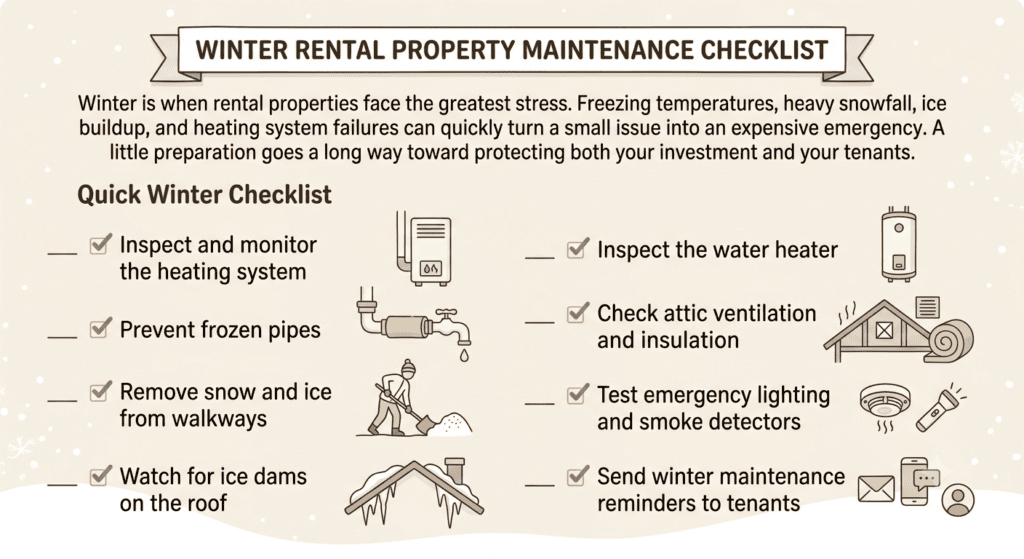
Winter is when rental properties face the greatest stress. Freezing temperatures, heavy snowfall, ice buildup, and heating system failures can quickly turn a small issue into an expensive emergency. A little preparation goes a long way toward protecting both your investment and your tenants.
Quick Winter Checklist
- ✔ Inspect and monitor the heating system
- ✔ Prevent frozen pipes
- ✔ Remove snow and ice from walkways
- ✔ Watch for ice dams on the roof
- ✔ Inspect the water heater
- ✔ Check attic ventilation and insulation
- ✔ Test emergency lighting and smoke detectors
- ✔ Send winter maintenance reminders to tenants
Prevent Frozen Pipes and Water Damage
Frozen pipes are one of the most common winter maintenance emergencies in Ontario. When water freezes, it expands, increasing pressure inside the pipe until it eventually bursts. The result can be extensive flooding, damaged drywall, ruined flooring, and costly repairs.
To reduce the risk:
- Insulate exposed pipes in basements and crawl spaces.
- Seal gaps around doors, windows, and utility openings.
- Encourage tenants to keep indoor temperatures consistent, even when they’re away.
- Disconnect and shut off exterior water lines before freezing temperatures arrive.
A few preventative steps today can save thousands in emergency restoration costs later.
Watch for Ice Dams and Roof Problems
Ice dams form when snow melts on a warm roof and refreezes along the colder roof edge. As more water backs up behind the ice, it can seep beneath shingles and into the attic.
Regularly inspect your property for:
- Large icicles
- Uneven snow melting
- Water stains on ceilings
- Ice buildup along gutters
Proper attic insulation and ventilation help minimize the risk of ice dam formation.
Keep Walkways Safe
Snow and ice aren’t just an inconvenience-they’re a liability.
Ensure that:
- Walkways are cleared promptly.
- Steps remain free of ice.
- Parking areas are safely accessible.
- Handrails remain secure.
Whether snow removal is handled by the landlord or tenant should always be clearly outlined in the lease agreement. Regardless of who performs the work, safety should never be overlooked.
Monitor Heating Systems
During winter, heating systems work harder than at any other time of the year.
Check:
- Thermostat accuracy
- Furnace filters
- Air vents
- Boiler pressure (if applicable)
- Water heater performance
Encourage tenants to report unusual noises, inconsistent heating, or higher-than-normal energy bills before a complete system failure occurs.
Have an Emergency Maintenance Plan
Emergencies don’t wait for business hours.
Every landlord should have a plan that includes:
- Emergency plumber
- HVAC technician
- Electrician
- Roofing contractor
- Property manager or emergency contact
Having trusted contractors available before an emergency occurs saves valuable time when every minute matters.
Monthly Rental Property Maintenance Tasks
While seasonal inspections are essential, some maintenance items should never wait three months.
Creating a simple monthly routine keeps your property in excellent condition year-round.
Every Month, Check the Following:
- Replace or inspect HVAC filters if needed.
- Test smoke and carbon monoxide detectors.
- Inspect under sinks and around appliances for leaks.
- Check water pressure throughout the property.
- Inspect exterior lighting.
- Monitor for signs of pests.
- Clean common areas if applicable.
- Check garbage and recycling areas.
- Inspect visible caulking around tubs and sinks.
- Review any maintenance requests submitted by tenants.
Monthly inspections are particularly valuable in older properties where plumbing, electrical systems, or appliances experience greater wear.
Tenant vs. Landlord Maintenance Responsibilities
One of the biggest causes of landlord-tenant disputes is misunderstanding who is responsible for what.
A well-written lease and open communication help avoid unnecessary disagreements.
| Landlord Responsibilities | Tenant Responsibilities |
| Structural repairs | Keeping the unit clean |
| Roof and exterior maintenance | Reporting maintenance issues promptly |
| Plumbing repairs | Basic housekeeping |
| Electrical repairs | Replacing light bulbs (if stated in the lease) |
| Furnace and HVAC servicing | Replacing HVAC filters if assigned in the lease |
| Smoke and carbon monoxide detector maintenance | Yard care if included in the lease |
| Major appliance repairs | Preventing avoidable damage |
Remember that legal responsibilities cannot always be transferred through a lease. Landlords remain responsible for maintaining the property’s overall safety and habitability.
Normal Wear and Tear vs. Tenant Damage
Not every repair is the tenant’s responsibility.
Normal Wear and Tear
Examples include:
- Worn carpet from everyday use
- Minor paint fading
- Loose door handles over time
- Small nail holes from hanging pictures
These are expected as a property ages.
Tenant Damage
Examples include:
- Broken windows caused by negligence
- Large holes in drywall
- Pet damage
- Burn marks on flooring
- Missing appliances or fixtures
Clear move-in and move-out inspection reports with dated photographs help distinguish ordinary wear from tenant-caused damage.
Common Rental Property Maintenance Mistakes to Avoid
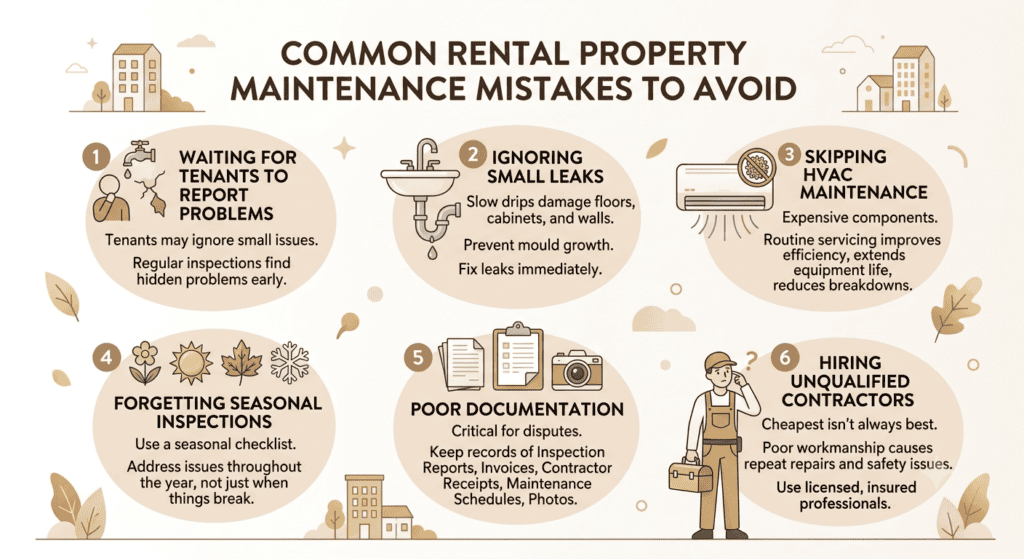
Even experienced landlords occasionally overlook maintenance tasks. Unfortunately, small mistakes often lead to expensive consequences.
Waiting for Tenants to Report Problems
Many tenants ignore minor issues because they don’t want to bother the landlord or assume the problem isn’t serious.
Regular inspections allow you to identify hidden problems before they escalate.
Ignoring Small Leaks
A slow drip beneath a sink may seem harmless today, but over time it can damage flooring, cabinets, insulation, and drywall while encouraging mould growth.
Fix leaks as soon as they’re discovered.
Skipping HVAC Maintenance
Heating and cooling systems are among the most expensive components in any rental property.
Routine servicing helps improve efficiency, extend equipment life, and reduce the likelihood of emergency breakdowns during extreme weather.
Forgetting Seasonal Inspections
Many costly repairs begin with maintenance tasks that were simply missed.
Following a seasonal checklist ensures your property receives attention throughout the year rather than only when something breaks.
Poor Documentation
If a maintenance dispute reaches the Landlord and Tenant Board, documentation matters.
Keep records of:
- Inspection reports
- Repair invoices
- Contractor receipts
- Maintenance schedules
- Before-and-after photographs
Good documentation demonstrates that you’ve taken reasonable steps to maintain the property.
Hiring Unqualified Contractors
Choosing the cheapest contractor isn’t always the best decision.
Poor workmanship often results in repeat repairs, safety issues, and higher long-term costs.
Whenever possible, work with licensed, insured professionals who have experience maintaining residential rental properties.
Essential Maintenance Records Every Landlord Should Keep
Good record-keeping isn’t just about organization-it protects your investment and provides valuable evidence if disputes ever arise.
Create a maintenance file for every property that includes:
- Annual inspection reports
- Seasonal maintenance checklists
- Repair invoices
- Contractor warranties
- Appliance manuals
- Service schedules
- Before-and-after repair photos
- Tenant maintenance requests
- Communication regarding completed repairs
Digital records stored securely in the cloud make it easy to access information whenever it’s needed.
If a tenant files a maintenance complaint, detailed documentation can demonstrate that repairs were completed promptly and responsibly, helping resolve disputes more efficiently.
When Should You Hire a Property Management Company?
Owning one rental property is manageable for many landlords. But as your portfolio grows-or life gets busier-keeping up with inspections, repairs, tenant requests, and legal compliance can quickly become overwhelming.
That’s where a professional property management company can make a real difference.
Instead of reacting to maintenance emergencies, experienced property managers follow preventive maintenance schedules that help identify issues before they become expensive repairs. They also have established relationships with trusted contractors, which often means faster response times and more competitive pricing.
You may benefit from hiring a property management company if you:
- Own multiple rental properties.
- Live far from your investment property.
- Don’t have time to coordinate repairs.
- Frequently deal with emergency maintenance calls.
- Want to reduce vacancies by keeping your property in excellent condition.
- Need help staying compliant with Ontario landlord regulations.
How The HAH Developments Helps Niagara Falls Property Owners
At The HAH Developments, we believe successful property management starts with prevention, not reaction.
Our team coordinates seasonal inspections, preventive maintenance, trusted contractor scheduling, emergency repair response, and ongoing property monitoring so landlords can focus on growing their investments instead of managing maintenance headaches.
Whether you own a long-term rental, a short-term vacation property, or an expanding investment portfolio in Niagara Falls, our proactive approach helps protect your property’s value while creating a better experience for your tenants.
Our services include:
- Long-Term Rental Management
- Short-Term Rental Management
- Airbnb Co-Hosting
- Preventive Maintenance Coordination
- 24/7 Emergency Maintenance Support
- Vendor and Contractor Management
Rather than waiting for something to go wrong, we help keep your property running smoothly throughout the year.
Final Thoughts
Rental properties are one of the most rewarding long-term investments you can own-but only if they’re properly maintained.
The biggest maintenance expenses rarely happen overnight. They’re usually the result of small problems that went unnoticed or were put off for another day. A loose roof shingle becomes a leaking ceiling. A clogged gutter leads to foundation damage. A neglected HVAC system fails during the coldest week of winter.
That’s why having a seasonal rental property maintenance checklist isn’t just helpful-it’s essential.
By following a consistent maintenance schedule, you’ll:
- Catch problems before they become expensive.
- Extend the lifespan of major systems and appliances.
- Keep tenants happier and more likely to renew their leases.
- Protect your property’s market value.
- Stay compliant with Ontario landlord obligations.
- Reduce the stress of unexpected emergency repairs.
Think of preventive maintenance as an investment rather than an expense. The time and money you spend today can save you significantly more in the future while protecting one of your most valuable assets.
If managing inspections, repairs, contractor coordination, and tenant communication feels overwhelming, you don’t have to do it alone.
The HAH Developments helps landlords across Niagara Falls protect their investments through proactive property management, seasonal maintenance planning, and responsive support all year long.
Whether you own your first rental property or a growing portfolio, our experienced team is here to help you maximize your property’s value while minimizing the stress of day-to-day management.
Ready to make property ownership easier?
Contact The HAH Developments today to learn how our professional property management services can keep your rental property in excellent condition-every season of the year.
Frequently Asked Questions
A common guideline is to budget between 1% and 4% of your property’s value each year for maintenance. Another widely used benchmark is setting aside 10% to 15% of your annual rental income. Older properties or homes with aging systems may require a larger maintenance budget.
Preventive maintenance involves regularly inspecting and servicing your property before problems occur. Reactive maintenance happens after something has already broken.
Preventive maintenance is almost always more affordable because it helps avoid emergency labour costs, extensive property damage, and tenant disruption.
Under Ontario’s Residential Tenancies Act, landlords must keep rental units in a good state of repair and ensure essential services such as heat, electricity, and water remain available. Landlords are also responsible for maintaining the property’s structural integrity and ensuring it meets applicable health and safety standards.
Most HVAC professionals recommend servicing heating systems once a year before winter and air conditioning systems before summer. HVAC filters should generally be inspected monthly and replaced every one to three months, depending on usage and manufacturer recommendations.
Ignoring legitimate maintenance requests can lead to costly repairs, unhappy tenants, legal disputes, and applications to the Landlord and Tenant Board (LTB). In some situations, landlords may be ordered to complete repairs, compensate tenants, or face other legal consequences.
If you own one local property and have the time to stay on top of inspections and repairs, self-managing may work well.
However, landlords with multiple properties, busy schedules, or out-of-town investments often find that professional property management saves time, reduces stress, and helps prevent expensive maintenance issues.